Internationaler Balltanz Club

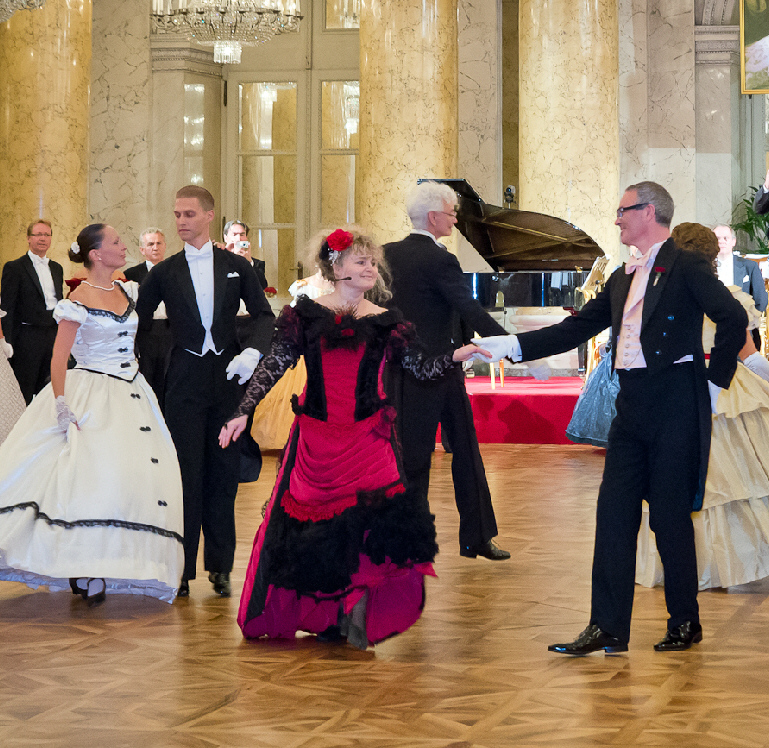
Gesellschaftstanz geboren im 19. Jahrhundert - Ballroom dances of the 19th century

Schwerpunkt in diesem Jahr: Paartanz in der Quadrille, choreografierte & geführte freie Paartänze - This year’s focus will be on couple dances in quadrilles, choreographed dances, lead and follow in free dances

⇒ Eventübersicht: Internationaler Balltanz Club 2018 (Deutsch)
⇒ Event overview: Internationaler Balltanz Club 2018 (English)

Tänze, die unterrichtet werden:

Quadrille „Sleigh Bell Polka“ Schlittenglocken Polka Quadrille (Philadelphia, 1866) | Quadrille „Strauss Quadrille“ Quadrille mit Polka, Varsovienne, Rheinländer, Mazurka, Galop, Walzer | Valse Russe „La Czarine“ (Paris 1857/ New York 1860) | Galop „Cachucha Galopp“ (Wien 1837) | Walzer „Mein Lebenslauf ist Lieb‘ und Lust“ (Wien 1869) | Schritt- und Führungstechnik in den Paartänzen | Quadrille à la cour (Berlin, seit 1855) - die Quadrille mit deutscher Tradition

Dances to be taught:

Quadrille „Sleigh Bell Polka“ (Philadelphia, 1866) |  Quadrille „Strauss Quadrille“ Quadrille with polka, varsovienne, schottisch, mazurka, galop, waltz | Valse Russe „La Czarine“ (Paris 1857/ New York 1860) | Galop „Cachucha Galopp“ (Vienna 1837) | Waltz “My Life is Love and Joy” (Vienna 1869) | Step and Lead Technique in couple dances | Quadrille à la cour (Berlin from 1855)

Videos auf www.creanc.com

  • Workshop
  • Course
  • 19th century
  • Quadrilles
  • Waltz
  • Intermediates
  • Advanced
  • Professionals

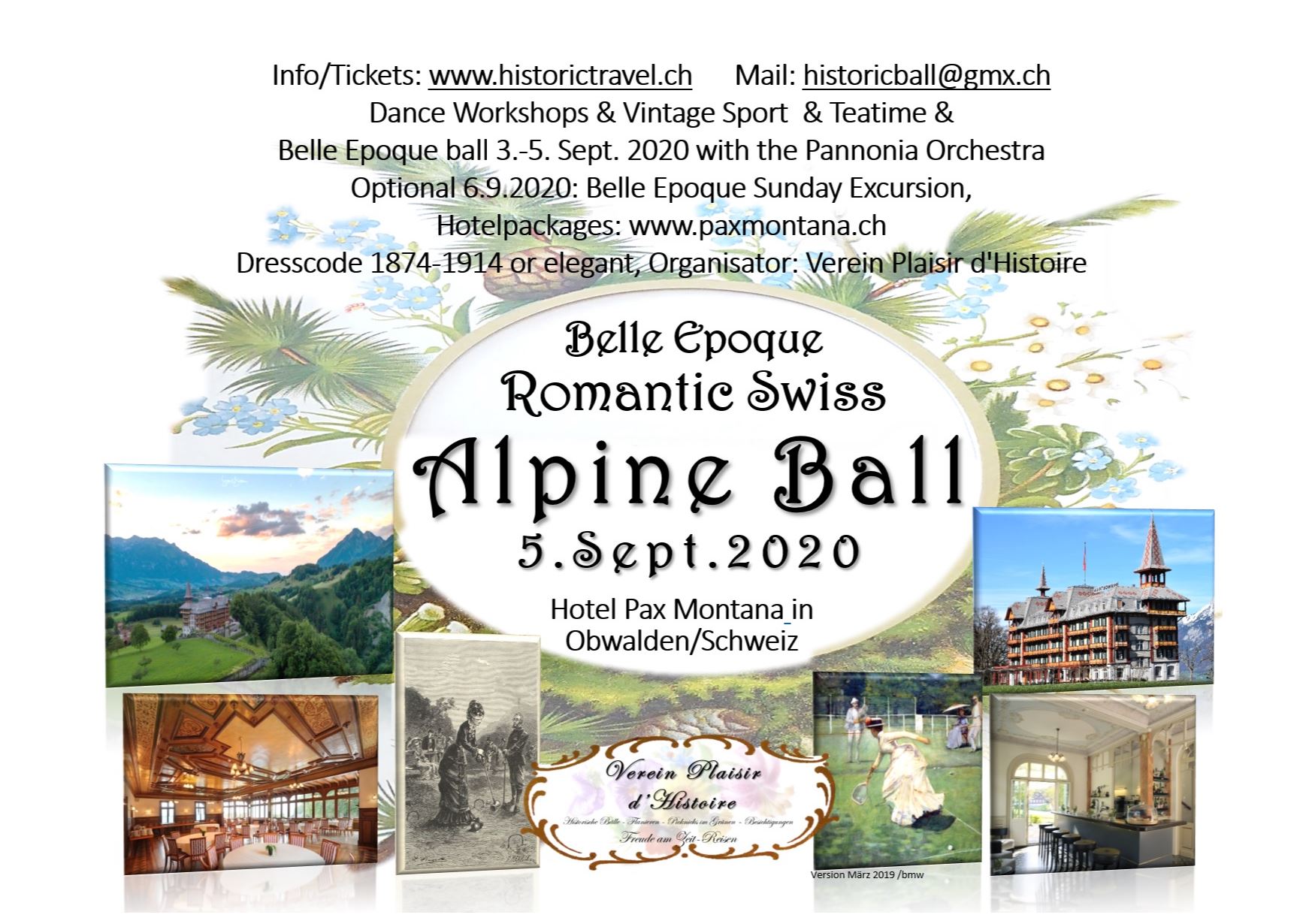
Romantic Swiss Alpine Ball

Der Verein Plaisir d'Histoire richtet seinen 2. romantischen Ball, den Belle Epoque "Swiss Alpine Ball" im Hotel Paxmontana aus, fast genau im geografischen Mittelpunkt der Schweiz. Mit dem Pannonia Orchesters aus Budapest, die Tanzleitung liegt bei Frau Vreni Huber und Madame Anne-Sophie Divoux. Details zum Programm in deutsch/französisch und englisch auf der Homepage erhältlich. Ab 1.5.2019 Earlybird-Tickets verfügbar. Das authentische Belle Epoque Hotel bietet in traumhaft schöner alpiner Umgebung ein interessantes Arrangement an. Flanieren, Spazieren, Sport à la Belle Epoque, Tanzen und Tee trinken.... Für Fragen stehe ich gerne zur Verfügung :-) Barbara Wernli, historicball@gmx.ch
  • Ball
  • 19th century

Von Minuet bis Hornpipe – Party bei Purcells!

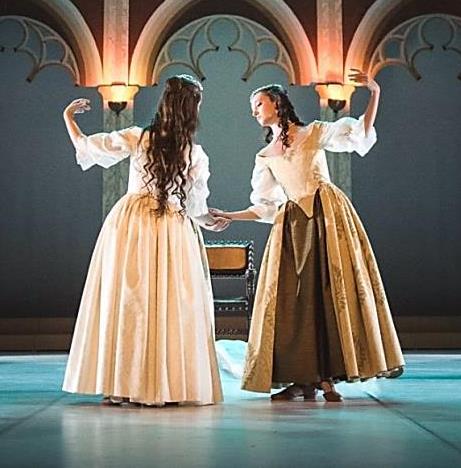
Endlich ist es soweit: Tisch und Stühle werden beiseite gerückt, die Pfeifen ausgeklopft, die Instrumente hervorgeholt, und ehe sich Henry noch ans Spinett gesetzt hat, drängt sich die fröhliche Abendgesellschaft schon in eine Gasse für die ersten Countrydances. Eine schmissige Jig aus der „Fairy Queen“, eine vertrackte Hornpipe aus „Amphytrion“, ein zartes Menuett, dann wieder eine Jig, ein Scotch Measure und neue Hornpipes. Die Augen beginnen zu leuchten, die Gesichter glänzen rot im Kerzenschein, immer ausgelassener wird die Stimmung … Weit nach Mitternacht tritt man wieder auf die kühle Gasse hinaus, noch ganz erfüllt von der wunderbaren Musik – und voll Vorfreude auf die nächste Party bei Purcells.

Kursprogramm:

Auf dem Programm stehen verschiedene Countrydance-Typen von Minuet über Jig bis Hornpipe und somit Choreographien von ganz unterschiedlichem Charakter, die stilgerecht mit barockem Schrittmaterial gestaltet werden. Neben einer Einführung in die entsprechenden Grundschritte werden wir uns auch einigen Schrittkombinationen zum Improvisieren einer Hornpipe widmen. Abgerundet wird das Programm durch weitere, fröhliche und unkomplizierte Countrydances.

Teilnehmerkreis

Eingeladen sind alle, die einen heiteren, eleganten und leichten Tanzstil kennenlernen wollen, und die noch keine oder nur wenig Erfahrung auf dem Gebiet des Barocktanzes haben.

  • Workshop
  • Baroque
  • Playford

Grand bal Renaissance au château d'Amboise

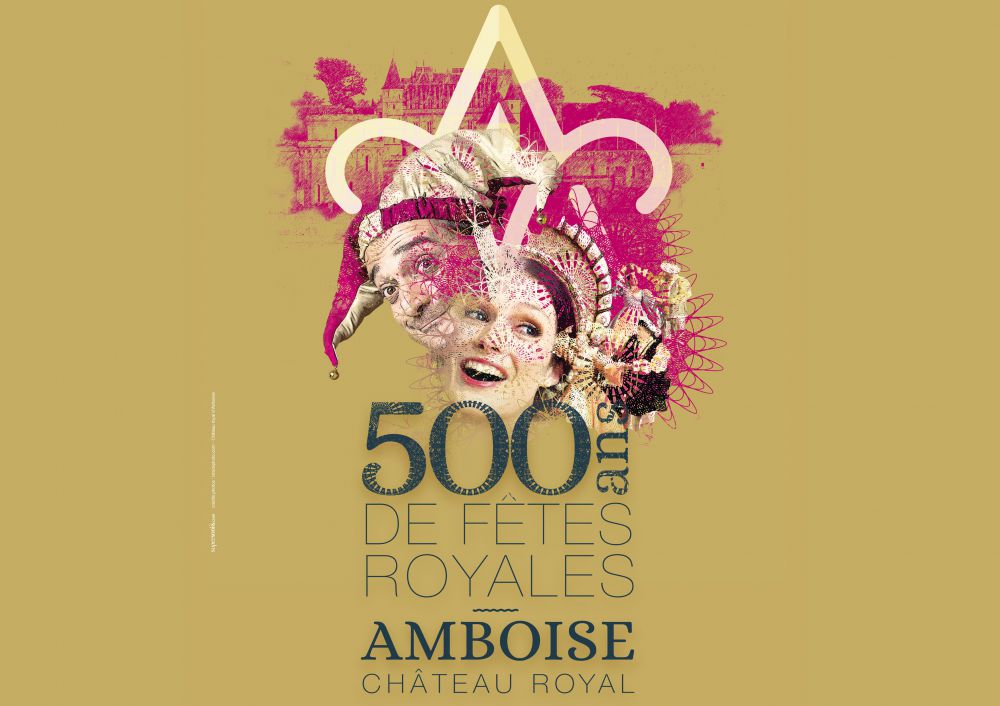
En 1518, il y a donc tout juste 500 ans, le château d’Amboise fut le théâtre de festivités grandioses à l’occasion du baptême du Dauphin François (fils aîné de François Ier) et du mariage du neveu du pape, Laurent II de Médicis. Ces rendez-vous exceptionnels, ou s’invitèrent les plus hauts enjeux diplomatiques, réunirent autour du roi tous les dignitaires de haut rang du royaume et les ambassadeurs des cours princières européennes.       

En 2018, le château d’Amboise fera revivre l’atmosphère de ces événements à travers une saison d’animation intitulée « 500 ans de fêtes royales ». Figures de proues de cette programmation, deux grands bals Renaissance se tiendront en soirée aux mois de mai et de juillet. 

Le Banquet du Roy vous invite dans le cadre exceptionnel du château d'Amboise à renouer avec l’art de la danse du 16e siècle, cette passion typiquement Française, à travers un événement festif, non convenu et participatif.

Programme : un bal axé Renaissance Française, mais avec quelques danses XVème et XVIIème pour varier les plaisirs !

Horaires :

- Atelier découverte facultatif à 16h 30
- Bal de 20h30 à 23h 30.

Le Banquet du Roy : Olivier Gladhofer, Emmanuel Vigneron, Anabelle Guibeaud, Maxime Fiorani, Adrien Reboisson, Gaelle Durand, Yannick Lebossé. Attention, la jauge est limitée, n'hésitez pas à réserver votre place à l'avance.

En retrouvant les pratiques des ménestriers du Roy, ces musiciens professionnels qui prenaient part aux réjouissances de la cour, Le Banquet du Roy transforme le temps d'un soir le spectateur en acteur d'un bal-découverte. Ouvert à tous, c'est un moment d'échange, de partage, de rencontre autour d'un patrimoine collectif que ces musiciens inscrivent comme une tradition vivante, inscrite dans le monde d'aujourd'hui. Guidé par un maître à danser, l'apprenti-danseur s'approprie à son rythme pavanes, bransles, et autres allemandes ; et expérimente la sensation jubilatoire de partager avec le groupe la même pulsation collective. Ce bal Renaissance est aussi l'occasion de découvrir un large spectre de sonorités et d'instruments, choisis en fonction des caractères des danses. Du son noble et puissant des bombardes et des chalemies (les "haulz") aux harmonies subtiles des flûtes, guiternes et dulcianes (les "bas"), c'est toute la richesse des esthétiques du 16e qui sert de fil conducteur à cette machine interactive à voyager à travers le temps.En 1518, il y a donc tout juste 500 ans, le château d’Amboise fut le théâtre de festivités grandioses à l’occasion du baptême du Dauphin François (fils aîné de François Ier) et du mariage du neveu du pape, Laurent II de Médicis. Ces rendez-vous exceptionnels, ou s’invitèrent les plus hauts enjeux diplomatiques, réunirent autour du roi tous les dignitaires de haut rang du royaume et les ambassadeurs des cours princières européennes.       

  • Ball
  • Quattrocento
  • French Renaissance
  • Early Baroque
  • Beginner
  • Intermediates

INTERNATIONAL BAROCK DANCE COURSE 2018

Schedule:

9:00 – 10:00 : yoga
10:00 – 11:00 : breakfast
11:00 – 13:00 : dance lesson
13:00 – 14:00 : lunch
14:00 – 17:30 : dance repertory

Teachers:

Advanced: Ingolf Collmar – dance master and choreographer – Artistic manager Modern Barock
Ensemble
Beginners: Johan Goessens – dance master

Price:

Dance course = €39,00 x 5 days = €195,00
Foods and drinks inclusive (breakfast, lunch en breaks) = + €10,00 per day
Overnighting = + €15,00 per day (maximum 9 people)

Discount on tuition fee

- 15% discount for the second member of the family (living at the same address)
- 50% discount for professional dancers and dance teachers

Further information

- Address: Casinostraat 6-8 9100 Sint-Niklaas (Belgium)
- Inscriptions before July 20th 2018
- Inscriptions via e-mail at info@stichtingklassiekedans.be
- Telephone: Johan Goessens - +32 498 36 61 71
- Payment via account BE52 6470 0428 9009 (SWIFT: BNAG BEBB)
Reference = ‘BDS18 + first and last name’
- The inscription is only confirmed by payment
- The payment of the course cannot be refunded by illness or other absence

  • Workshop
  • Summer School
  • Baroque
  • Beginner
  • Advanced

Das onoldische Schatzkästlein

Man sagt, die Nürnberger und die Ansbacher sind sich nicht grün. Schon vor 500 Jahren wurde auf beiden Seiten getrickst, getäuscht und taktiert. Ein geheimnisvolles Schatzkästlein entführt die Zuschauer in die Zeit, in der der Konflikt mit dem Verkauf der Nürnberger Burg seinen Anfang nahm.
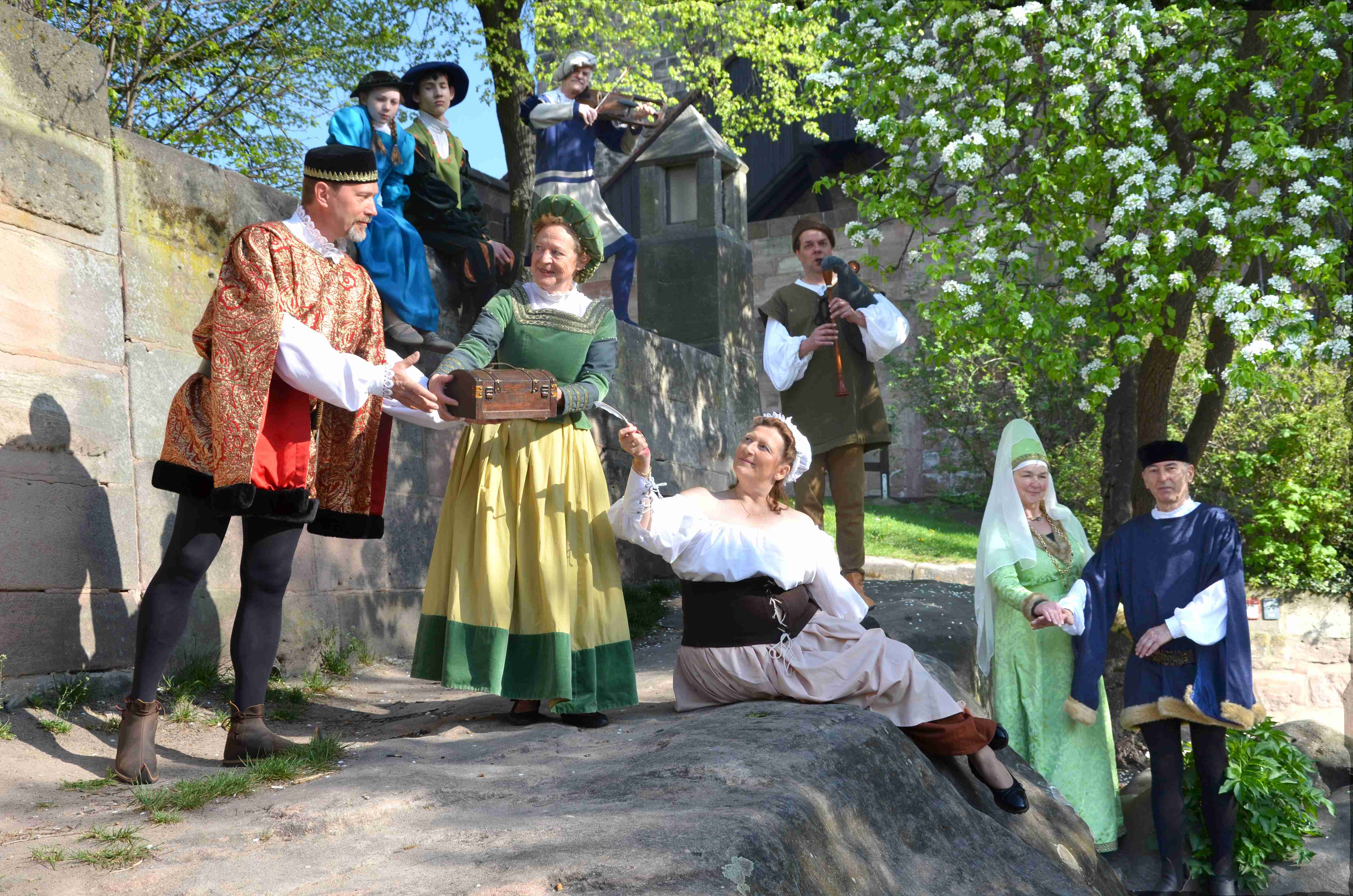
Die Ansbacher Markgrafentochter Margarete ist wild entschlossen, eine gute Partie zu machen, auch wenn ihre Chancen als eines von 17 Kindern schlecht stehen. Um sich schmeichelhaft in Samt und Seide zu präsentieren, greift Margarete zu drastischen Mitteln. Sie lässt das wertvolle Schatzkästlein der Familie durch ihre Kammerzofe Barbara nach Nürnberg verkaufen. Diese hat in die Noris bessere Kontakte, als der Marktgraf je erfahren darf, denn insgeheim ist sie Kundschafterin der Nürnberger Patrizier. Beide Frauen ahnen nicht, dass sie mit dem Diebstahl des unersetzlichen Familienerbes der fränkischen Zollern einen Fluch auf sich laden. Dieser wird die Adelstochter und das Dienstmädchen ins Unglück stürzen, es sei denn, die Gegenstände aus dem onoldischen Schatzkästchen werden ihren rechtmäßigen Eigentümern zurückgegeben. Denn der Siegelring, der erblindete Spiegel und die Schwanenritterfeder sind der Schlüssel zur Lösung des Zwistes zwischen Nürnberg und Ansbach.


„Das onoldische Schatzkästchen“ lädt die Zuschauer zu einer Zeitreise in die Geschichte der fränkischen Zollern und der Nürnberger Patrizier ein. Mit viel Musik und Tanz sowie historischen Kostümen aus der Zeit der Renaissance präsentiert die Nürnberger Schembart-Gesellschaft ein Spektakel mit spannenden Episoden über den heroischen Kurfürsten Albrecht Achill, den „fürstlichen Mordbrenner“ Albrecht Alkibiades bis hin zur mildtätigen Markgräfin Sophia – genauso wie es vor 500 Jahren geschehen ist, oder doch zumindest so, wie es gewesen sein könnte...


Eine Kooperation der Nürnberger Schembart-Gesellschaft in Zusammenarbeit mit Stückwerkstatt Schimmert.

Beginn: Sonntag um 11 Uhr - Mittwoch um 20 Uhr

Abendkasse: 14 Euro/ erm. 12 Euro

Bei schlechtem Wetter in der Vorhalle
 

  • Performance
  • Renaissance
  • All levels

Historical Dances Summer Training Courses 2018

by Chestnut & Fantaisies Baroques 

DSC_6188

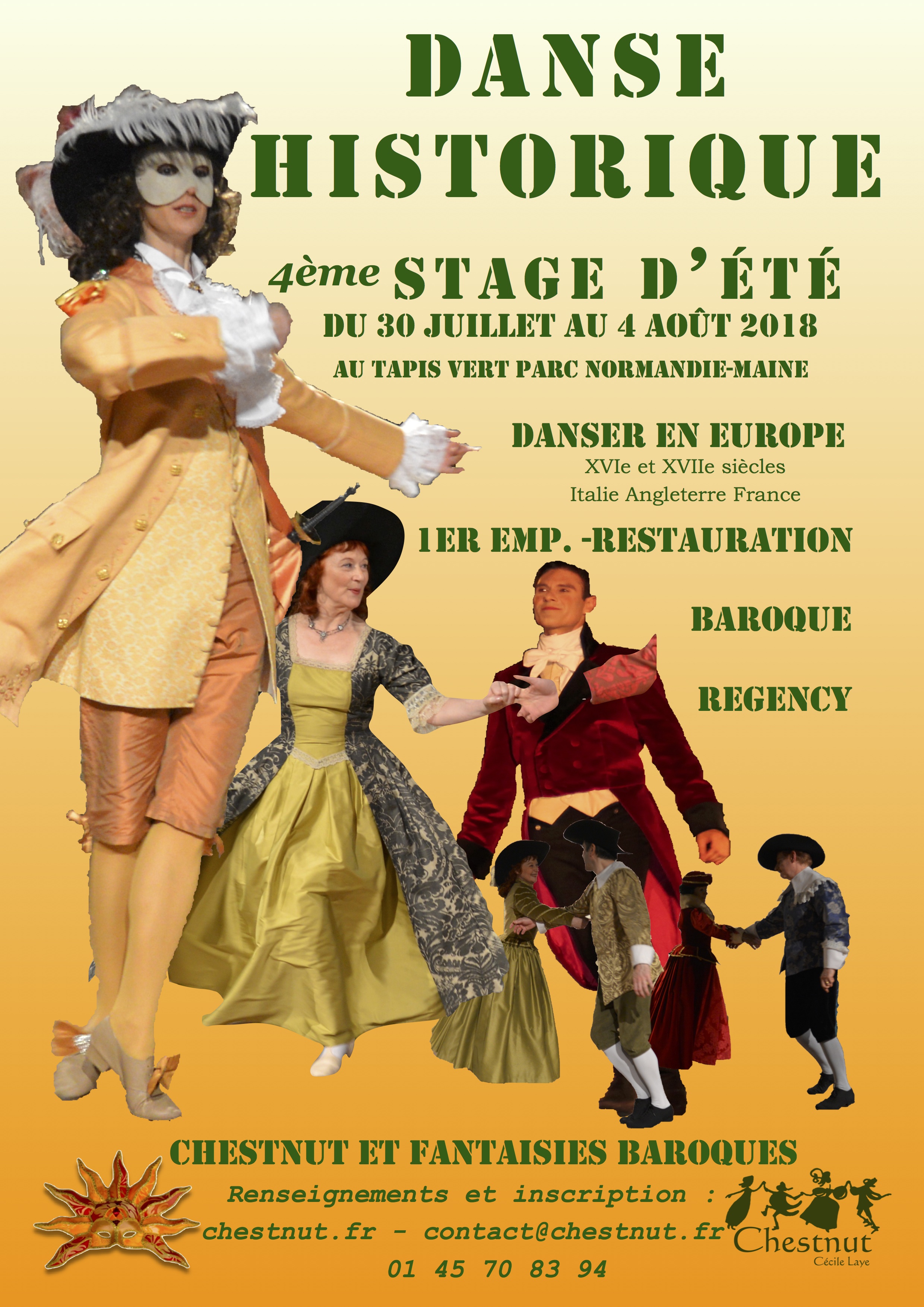
Chestnut and Fantaisies Baroques welcome you from July 30 to August 4, 2018 to their fourth summer school of period dances in Normandy.


  • Dancing in Europe during the end of the 16th and the beginning of the 17th centuries (Italian, French and English tradition)
  • Baroque dances
  • Jane Austen & Regency dances
  • French 1rst Empire - Restauration dances

With four different subjects and two instructors (Cécile Laye and Irène Feste), you’ll be able to make up your own schedule according to your tastes and how energetic you feel. You may opt for an intensive dance programme, up to 6 hours daily, or choose a mix of workshops and time for resting or for touring the area.

In our workshops, the programme allows for all levels of dancing. Each dancer will be taught variations suitable to his/her possibilities.

Each day will start at 9 a.m. with a half hour of warming up exercises, led by each instructor in turn.


WORKSHOP DESCRIPTION


MORNING : 


  • Dancing in Europe during the end of the 16th and the beginning of the 17th centuries through the Italian, French and English traditions workshop (3h : 9h45-12h45): Cécile Laye, The workshop will cover several modern dances. The focus will be on squares for two couples and dances including one or several heys. France: Les Bouffons, out of Thoinot Arbeau’s Ochésographie (1588), first and third passages. Italy: Bizarria d'Amore, choreographed by Cesare Negri and published in his 1602 book, Le Gratie d'Amore. England: Hit and Miss and Parson's Farewell, dances known at the time of Elisabeth 1st and James 1st, collected by the London publisher John Playford in the 1651 edition of The English Dancing Master.

or
DSC_6054alpha

  • Baroque dances workshop (3 hours: 9:45-12:45): Irène Feste, La Lorraine de Balon, ball dance for one man and one woman, composed on a rigaudon de Provence music. This dance appears in the XVIIth Recueil de danses pour l’année 1719.


AFTERNOON :


  • Jane Austen's and Regency dances workshop (1h30 : 15h/16h30 or 17h/18h30 on alternate days): Cécile Laye, Some figures were kept through English 17th and 18th century dances, from circles for eight to cotillon, with Newcastle (John Playford,1651) and La Nouvelle Promenade (James Fishar,1775). We’ll see the use of perpendicular lines in both these dances – they also occur in many choreographies of the period. The workshop will include a proposal for stepping in a longways duple minor set. At the start of the 19th century it became fashionable to use traditional Scottish and Irish steps in longways for as many as will while the figures in longways became much simpler than in earlier times. The stepping proposed will be based on Countess of Yarmouth's Fancy (Alexander Wells, 1800)

and

  • French 1rst Empire - Restauration workshop (1h30 : 15h-16h30 or 17h-18h30 on alternate day): Irène Feste, The Mazurka arranged by Saint Léon for H.R.A. Prince Charles of Württemberg and the Allemande created for the three princesses. These dances made up by Michel Saint Léon, whose son was Arthur Saint Léon, the famous dancer, were meant for the princes and princesses of the Württemberg house to improve their education and enable them to dance at the court balls. During the first third of the 19th century Mazurka was quite fashionable in all great European salons. L’Allemande à trois consists in a series of interweaving movements and figures for which we could make up names, such as arches, rosette, revolving around the sun…

EVENING ACTIVITIES


Evening entertaiment will be organized for trainees and instructors to share a good time:

  • Tuesday: team quizz on period dances
  • Wednesday: films
  • Thursday: will be decided by trainees
  • Friday :  Costume Ball including the dances studied in the workshops. (Please note: costume is not a must.)

TEACHERS


IMG_0546

Cécile Laye studied historical dances in England with Dolmetsch Historical Dance Society, Nonsuch History and Dance and EFDSS (English folk Dance and Song Society). She studied in particular with famous teachers or researchers such as Anne Daye, Anne Cottis, Peggy Dixon, Ethyl Anderson, Marjorie Fennessy, Tom Cook and Alan Davies. In France, she studied under Francine Lancelot, Andréa Francalancci and Barbara Sparti. In 1998 she founded the CHESTNUT company to make available the repertoire of figure dances of the time of the Stuarts and the English inheritance, from a literary and historical point of view, in collaboration with musicians, dancers, actors, singers, horse riders and fencers. She also graduated from Cours Florent in acting and staging.


Irène Feste

After a diploma in ballet dancing, Irène Feste studied « Belle Dance » with  L’Eclat des Muses, a company led by Christine Bayle. In 2007, she founded her own company with Pierre-François Dollé:  Fantaisies Baroques. They design and perform dance/theatre shows in schools and music schools. Irène Feste specialises in baroque and Premier Empire (Napoleonic time) dances, her two main fields of research. She regularly dances with compagnie Divertimenty.


VENUE


Le Tapis Vert, a residence for artists nestling in a large estate in the Normandie-Maine park, offers several accommodation possibilities on site, from boarding-house to rented rooms and camping. Also on site, two superb halls for activities and a circus tent make for a high quality environment.

TheatreTapis vert 04image003Chap-int


FEES


Tuition prices (€/pers.) : 

1 hour 30 Module : €125

  • French 1rst Empire - Restauration (1h30 in the afternoon)
  • Jane Austen & Regency dances (1h30 in the afternoon)

3 hours Module :  €216

  • Baroque dances (3 hours in the morning)
  • Dancing in Europe 16th & 17th centuries (3 hours in the morning)
  • French 1rst Empire - Restauration + Jane Austen & Regency dances (2 x 1h30 in the afternoon)

4 hours 30 Module : €288

  • Baroque dances (3 hours in the morning) + French 1rst Empire - Restauration or Jane Austen & Regency dances (2 x 1h30 in the afternoon)
  • Dancing in Europe 16th & 17th centuries (3 hours in the morning) + French 1rst Empire - Restauration or Jane Austen & Regency dances (2 x 1h30 in the afternoon)

6 hours Module: €336

  • Baroque dances (3 hours in the morning) + French 1rst Empire - Restauration and Jane Austen & Regency dances (2 x 1h30 in the afternoon)
  • Dancing in Europe 16th & 17th centuries (3 hours in the morning) +French 1rst Empire - Restauration and Jane Austen & Regency dances (2 x 1h30 in the afternoon)


Accommodation and meals prices  (€/pers.) : see them on chestnut.fr

Please, note : before you fill in your registration form,please check with us calling 0033 6 60 22 23 21 to find out which type of accommodation is still available.

HOW TO GET THERE


Reaching Tapis Vert

  1. By car

Le Tapis vert is 200 km away from Paris and 130 km away from Rennes.

  1. By train

The nearest train station is Alençon, reached either through Surdon from Paris Montparnasse-Vaugirard or by TGV through Le Mans. Share taxi or car from Alençon station.

A shuttle will be organized to fetch the trainees arrived at the station of Alençon by the train of 4:07 pm. Thank you for indicating us that you will arrive by the train.

TRAINEES’ WELCOME


Trainees are welcome from 17:00 on Monday July 30, 2018.

Please note : as no evening meal is provided on the first day evening (Monday), please bring a picnic dinner !

Departure on Saturday, August 4 after breakfast.


REGISTRATION


Please note : before you fill in your registration form, please check with us calling 0033 6 60 22 23 21 or contacting us at contact@chestnut.fr to find out which type of accommodation is still available.


Registration form here


Payment from abroad : please contact us


CONTACT- INFORMATION


contact@chestnut.fr ou 0033 6 60 22 23 21
  • Workshop
  • Summer School
  • Course
  • Renaissance
  • Cinquecento
  • French Renaissance
  • Baroque
  • Playford
  • 19th century
  • Quadrilles
  • Regency
  • All levels