Dance classes
- Ongoing classes
- 19th century
- All levels
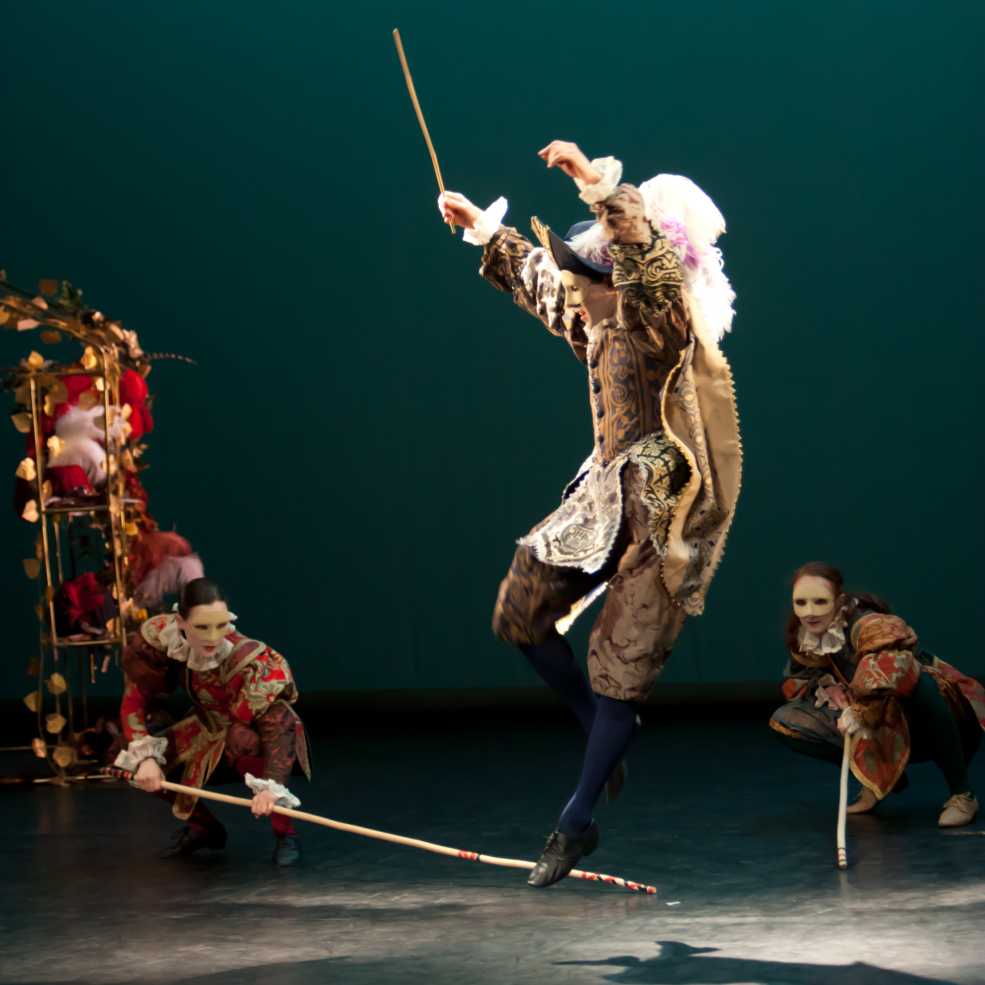
(English version: see below) Le Ballet de la Merlaison est un ballet de cour créé par Louis XIII en 1635 qu’il dansa lui-même avec ses compagnons pour le Carnaval à Chantilly puis à Royaumont.
La « Merlaison », mot que le Roi invente pour désigner une chasse au merle, devint le prétexte d’un ballet plein de fantaisie dans lequel il met en scène une « petite » chasse où, danseur lui-même, il se travestit en femme de marchand, puis en fermier collecteur d’impôts, et pourquoi pas, en merle farceur ou en oiseau avisé et prompt à déjouer les pièges.
Dans ce divertissement en musique, à la fois intime et public, la Compagnie Belles Dances fait le choix d’un style allant du sérieux au burlesque, faisant apparaître de nombreux personnages appartenant au rituel de la chasse : Gascons, Fauconniers, Arbalestriers, Pistoliers et autre Nobles du Pays, masqués et « armes » à la main. Sont aussi présents la Reine, Mademoiselle de La Fayette, que le Roi poursuivait alors de ses assiduités, ainsi que Richelieu, personnage incontournable du règne de Louis XIII.
Ce ballet pour neuf danseurs et ensemble instrumental reprend la partition initiale de Louis XIII, que Patrick Blanc a restaurée, complétée et ornementée.
Les chorégraphies originales ayant complètement disparu, c’est à partir de traités d’époque et un long travail de recherche que Christine Bayle propose une création chorégraphique entièrement nouvelle.
(Image ©Mathieu Dequirot)
This french musical entertainment is putting on a Ballet from the first half of the 17th century, often called Ballet de Cour. The dance company La Cie Belles Dances has created a new production of this ballet created in 1635 by Louis XIII who conceived the plot, wrote the poetry and music, designed the costums, and danced in it!
The original score of Louis XIII comprises 19 Entrées: this ballet can be called after St Hubert ("La Manière de composer et de faire réussir les ballets") a "beau ballet" : sufficiently striking was Le Ballet de la Merlaison to be evoked two centuries later by Alexandre Dumas in his novel The Three Musketeers. These Entrées (mostly in two phrases) have been harmonized, developed and rewritten by Patrick Blanc to give them greater richness and variety and for the choreography, created by Christine Bayle. In their instrumentation we find the colours of an “unrefined” score, the novel style of which has been ignored, both in terms of its musical value and in its relation to dance.
This production clarifies these relationships and gives back to this ballet its meaning and its historical value. Christine Bayle redoes the choroegraphy, entirely lost, after a new dramaturgy, between this "small" hunt and the context: Louis XIII is in love with the young Miss La Fayette, and Richelieu attends maybe this show. The war with the Spanish is close.
Why la Merlaison? Because the king devised this word to invent the feast which closed the blackbird hunt. This Ballet was acted and danced by the protagonists for whom he wrote it: that is to say a king, his half-brothers, his grand Equerry, his favourite and his group of companions, hunters, soldiers, pages, and dancing masters: for several days, between two estates, Chantilly and Royaumont, they celebrated mid-Lent, hunt and publicly acted out roles such as farmers, peasants, Gascons, Flemings, Lorrains, and curious birds.
This is neither a reconstruction nor a recreation: it is a creation based on research we experimented during many years.
Co-Production: Fondation Royaumont, Festival baroque de Pontoise, CnD, ADAMI, Ministère de la Culture et de la Communication.
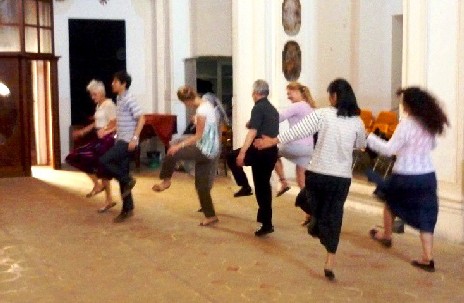
We give historical dance classes both on a regular base l and as master-classes for children (from 5 years) and adults, taking their level of dance skills into account.
The dance classes program includes both dance class themselves and historical stories about daily life and culture of nobility. List of dances: polonaise, waltz, country dances, polka, quadrilles, mazurka, dances abroad 19-20th centuries. If necessary we study dances of 17-18th centuries and modern variations. All skills one can use at balls and dance evenings.
Sala Pinacoteca
Piazza del Comune – Assisi, Italy
taught by Chieko Ono
4-5 july 2015
With "Gloria et Malum" (Belreguardo-Micrologus) an original CD of fifteenth century Italian Court Dance music.
This work brings together research on historical dances and music and was
born from close collaboration between Chieko Ono, director of the ancient dance company Belreguardo and the ensemble Micrologus.
For further information : tel. +39 (0)75 8043548, +39 348 3848819
Il Convivio Cultural Association & Belreguardo Italian Renaissance Dance Company
A course held in English in the heart of Paris
Dancing to Händel and Lully
Welcome to a Paris spring weekend focusing on baroque repertoire choreographies set to music by Händel and Lully!
This is a course for you who
– have never tried baroque dance before, but you are a mover, used to dancing and quickly take up new movements
– are a musician or a singer, used to baroque music and eager to move
– have experience with contre dances and know some of the basic step material
– have done baroque repertoire dances, but wish to work with the material at a slower pace
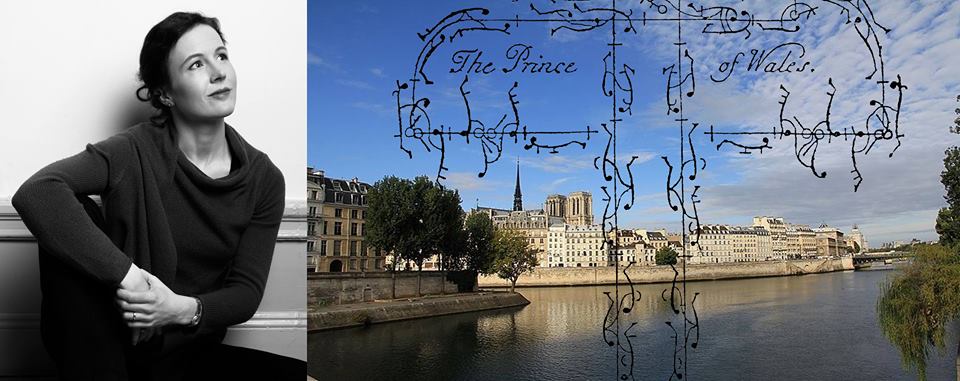
Choreographic material will be drawn from ‘The Prince of Wales’, a bourrée-like choreography by Anthony l’Abbé from 1727, set to music by Händel from his opera Giulio Cesare.
On Saturday afternoon there will be a workshop session focusing on ‘Gigue à deux’ by Feuillet from 1700, set to music by Lully from his opera Roland. For this session students are encouraged to study the choreography beforehand – for those who already know it, it will be an opportunity to work on style and technique. Those who don’t know it will learn only a smaller part and work on that.
There will also be time to relax in one or two easy contre dances.
STUDIOS
Micadanses, 20 rue Geoffroy L’Asnier, 75004 Paris (in the Marais)
Studio de la Main d'Or, 16 Passage de la Main d’Or, 75011 Paris (2 km walk past Bastille, or two metro stops from Micadanses)
SCHEDULE
Saturday 10-13 at Micadanses, studio May B
Warm-up, technique training and The Prince of Wales
Saturday 15-18 at Studio de la Main d’Or
Gigue à deux workshop
Sunday 10-13 at Micadanses, studio Noces
Warm-up, technique training and The Prince of Wales
Sunday 14-16 at Micadanses, studio Noces
The Prince of Wales
FEES
Normal fee: 125€
Reduced fee for students and professional dancers, singers, actors and musicians: 105€
REGISTRATION
To register, please send an e-mail with name, address and phone number to karin.modigh@baroquedancers.se.
Once your registration has been received, you will get a confirmation with instructions for payment via bank transfer. The maximum number of participants is 17.
Zusammen mit den Altstadtfreunden Nürnberg
lade ich Euch wieder zu einem ganz besonderen Tanzboden ein:
Zu einem Tanz in den Mai.
Die Walpurgisnacht ist berüchtigt für Hexentänz und Schabernack.
Traditionell gilt die Nacht vom 30. April auf den 1. Mai als die Nacht,
in der die Hexen insbesondere auf dem Blocksberg (eigentlich Brocken),
aber auch an anderen erhöhten Orten ein großes Fest abhalten.
Diese Vorstellung ist beeinflusst von den Beschreibungen
des Hexensabbat in der Literatur des 15. und 16. Jahrhunderts.
Im 17. Jahrhundert erscheint bei Johannes Praetorius
(Blockes-Berges Verrichtung, Leipzig 1668):
„Ausführlicher Geographischer Bericht
von den hohen trefflich alt- und berühmten Blockes-Berge:
ingleichen von der Hexenfahrt
und Zauber-Sabbathe
so auff solchen Berge die Unholden
aus gantz Teutschland
Jährlich den 1. Maij in Sanct-Walpurgis Nachte
anstellen sollen.“

Eine ganze Nacht lang lassen wir uns
in die Glanzzeit Nürnbergs zurückversetzen,
schmausen, lachen & tanzen.
Zu meinem historischen Tanzboden treffen sich regelmäßig Tanzfreunde
von Nah und Fern für normalerweise einen ganzen (Sonntag-)Nachmittag
mit leichten Tänzen zum Reinschnuppern und Mitmachen.
Diese Tänze sind Gassen- und Kreistänze aus drei Jahrhunderten.
Dabei ist die Auswahl der Tänze so getroffen,
dass jeder ohne Vorkenntnisse einfach mitmachen kann.
Die Pausen werden gefüllt mit Geschichten und Wissenswertem
aus der Renaissance und dem Barock.
Als Tanzmeister in historischer Gewandung entführe ich Euch
auf eine Reise an die Höfe von Fürsten und Königen.
Den Auftakt bildet diesmal ein gemeinsames zwangloses Mahl,
bei dem viel erzählt, geschmaust und gelacht werden darf,
bevor wir uns zu einem kleinen bunten Ball aufschwingen.
Die Veranstaltung richtet sich
an alle Tanzbegeisterten und Freunde historischer Tänze,
die diese kennen lernen, ausprobieren
oder einfach nur das bunte Treiben beobachten
und den Wiederaufbau des Nürnberger Juwels unterstützen wollen.
Es werden keine Vorkenntnisse benötigt.
Auch für Begeisterte ohne festen Tanzpartner geeignet.
Eintritt: 20,- €
Um Voranmeldung wird gebeten!
30.4.2015
ab 20:00 Uhr
bis ca. 1:00 Uhr
Veranstaltungsort:
Kulturscheune der Altstadtfreunde
Zirkelschmiedsgasse 30
90402 Nürnberg
Telefon 09 11/24 13 93
So findet Ihr zur Kulturscheune
hier klicken.
General programme of the II International Saxon Festival RYDZYNA – LESZNO
16-19.07.2015.
Day I ( Thursday, 16th July 2015)
10:00-18:00 (park, castle), Thematic classes( fencing, early dance), Cultural Centre- participants, invited guests and children, youth, disabled people of Rydzyna’s inhabitants and nearby cities, running time: 2 hours.
12:00 Opening of the Historical Park- setting up soldierly camp, camping life- castle’s guard, dancing, campfire, food, marches of the army, costume’s walks around town, happenings, genre scenes: participants, invited guests and children, youth, disabled people of Rydzyna’s inhabitants and nearby cities.
20.00 Closing Historical Park for the audience
15:00 Picnic for the invited guests in the historical outfits - closed part
20:00 Private audience with the King in the castle- only for the guests, admission fee
21:00 Elegant supper and dances- only for the guests, admission fee
Day II ( Friday, 17th July 2015)
11:30 Departure to Leszno
12:00 Royal legation to Leszno, visit in the Town Hall
12.30 Concert of the AMADEUS TRIO band
18:30-20:00 Lecture in the Cultural Centre in Rydzyna - "King Augustus III and his court" - Mrs. Maria Brodzka-Bestry, Royal Castle in Warsaw
22:00 Fetes Galantes - only for guests, admission fee
Day III ( Saturday, 18th July 2015)
11.30 Official visit of King Augustus III at the Main Square in Rydzyna, march of the army, military drill’s show, running time: around 2 hours
12:00-14:00 Thematical classes( XVIII century’s fashion, fencing) Cultural Centre - participants, invited guests and children, youth, disabled people of Rydzyna’s inhabitants and nearby cities.
12:30 Staging of the battle- castle’s park in Rydzyna
14:00 Gunpowder weapon’s show (shooting range in Rydzyna)
15:00 Obligatory rehearsal of early dances at the Ballroom for the ball’s guest, admission fee
20:00-5:00 The Grand Royal Rococo Bal AUGUSTUS REX - only for the guest with reservation till 15.06.2015, admission fee
Day IV ( Sunday, 19th July 2015)
13:00 Lever of the King – festive ceremony of King’s arising at the castle
14:00 Holy Mass in Latin at the church in Rydzyna, baroque, artistic setting
18:00-20:30 The end of the II International Saxon Festival:
- the special play performed by Corona Florum group
- the play performed by Dansantes
- music concert
INFORMATION
Grand Royal Rococo Ball - 125 euro
Payment:
IBAN: PL 62 1090 1463 0000 0001 2378 5174BANK ZACHODNI WBK S.A. SWIFT CODE: WBKPPLPP Maciej Rąbalski ulica Promienista 36 62-002 Suchy Las
Accomodation: ( in the castle in Rydzyna)
Hotel "ZAMEK w RYDZYNIE", pl. Zamkowy 1, 64-130 Rydzyna, tel: 603 517 817, 65 529 50 40, e-mail: zamek@zamek-rydzyna.com.pl
Hotel night in the castle with breakfast- 30 euro/1 person per night
Bank account:
BZ WBK S.A. O/Leszno PL 79 1090 1245 0000 0000 2400 9731 SWIFT WBK PPLPP
· Historical costume is required during whole festival ( breakfasts, walks, tours, suppers, ball, Holy Mass, games and plays)
· Contact:
Katarzyna Komosińska – Festival’s Manager, e-mail: festiwalsaski@gmail.com
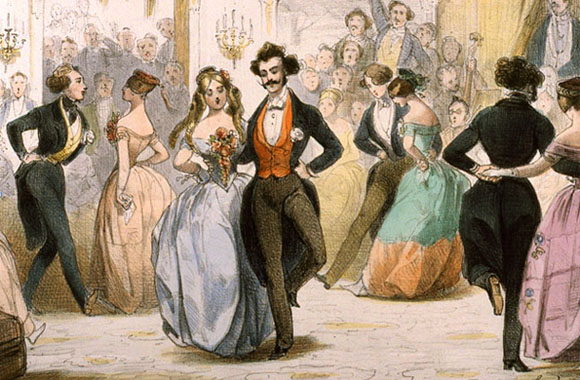
Eine Tanzreise in die Geschichte Amerikas vom Tuesday Club Annapolis bis in die mansion ballrooms 1780 – 1810.
Fr. 29. Mai, Tanzstunden von 19.30 bis 22 Uhr
Sa. 30. Mai, Tanzstunden von 10 bis 17 Uhr / Ball bis 23 Uhr
Die Einzelheiten (Folder-Ausschreibung) kostenlos online anfordern bei <axel.roehrborn@gmx.de>
Das Thema: Die Kolonialisten aus England brachten auch ihre Musik- und Tanzkultur mit nach Amerika. Die Landlord-Aristokratie in den Herrenhäusern an den großen Flußläufen der Kolonie Virginia war die Wiege der Gründungsväter der USA. Zu diesem Lebensstil gehörte auch die Ausbildung in Musik und Tanz. Diese waren „the social glue“ - der soziale Kleister - zur Pflege von Beziehungen in unsicheren Zeiten. Im Verwaltungszentrum Annapolis, wo sich die Elite oft aufhalten musste, gab es seit 1745 den von dem Schotten Dr. Alexander Hamilton gegründeten „Tuesday Club“ nach Vorbildern aus Edinburgh. „The Club documented musical activities in the city at weekly meetings, expressly and purposely European in character, using Western Classical Music but performances were recreational in nature, the earliest known American secular music“ (Library of Congress Washington: „Music in collonial Annapolis“ von J.B.Tally). George Washington und das Establishment besuchten anlässlich der Feierlichkeiten zur Staatengründung 1789 sowie bei dienstlichen Terminen in kollonialen Verwaltungszentren auch Bälle, man gab Gesellschaften (Assemblies). Thomas Jefferson lernte als Diplomat in Paris und London die Salons kennen, brachte Material davon mit in die Staaten, hatte die Hausmu- sikgruppe seiner Frau und Töchter für ausgewählte Gäste zur Verfügung. Unsere Workshops und der Hausball schöpfen aus diesen historischen Quellen. Wir lassen damalige bürgerliche English Country Dances und Pariser Salontänze mit den Einflüssen der Mentalität amerikanischer Kolonialzeit wieder aufleben.
Die Macher
Tanzanleitung: Axel Röhrborn (Kulturverein Erlanger Tanzhaus u.a.)
Musik: Astrid Schenk (Stehgeigerin im Workshop nachmittags)
Jefferson's Hausmusik: Die Gruppe „kontraMedleys“ (Erlangen) als Frau Martha Jefferson geb. Wayles und deren zwei Töchter Martha und Mary.