HISTORICAL DANCE SUMMER COURSES 2021 / July, 17-21, Paris / English Country Dances and Baroque Dances / Cécile Laye and Irène Feste
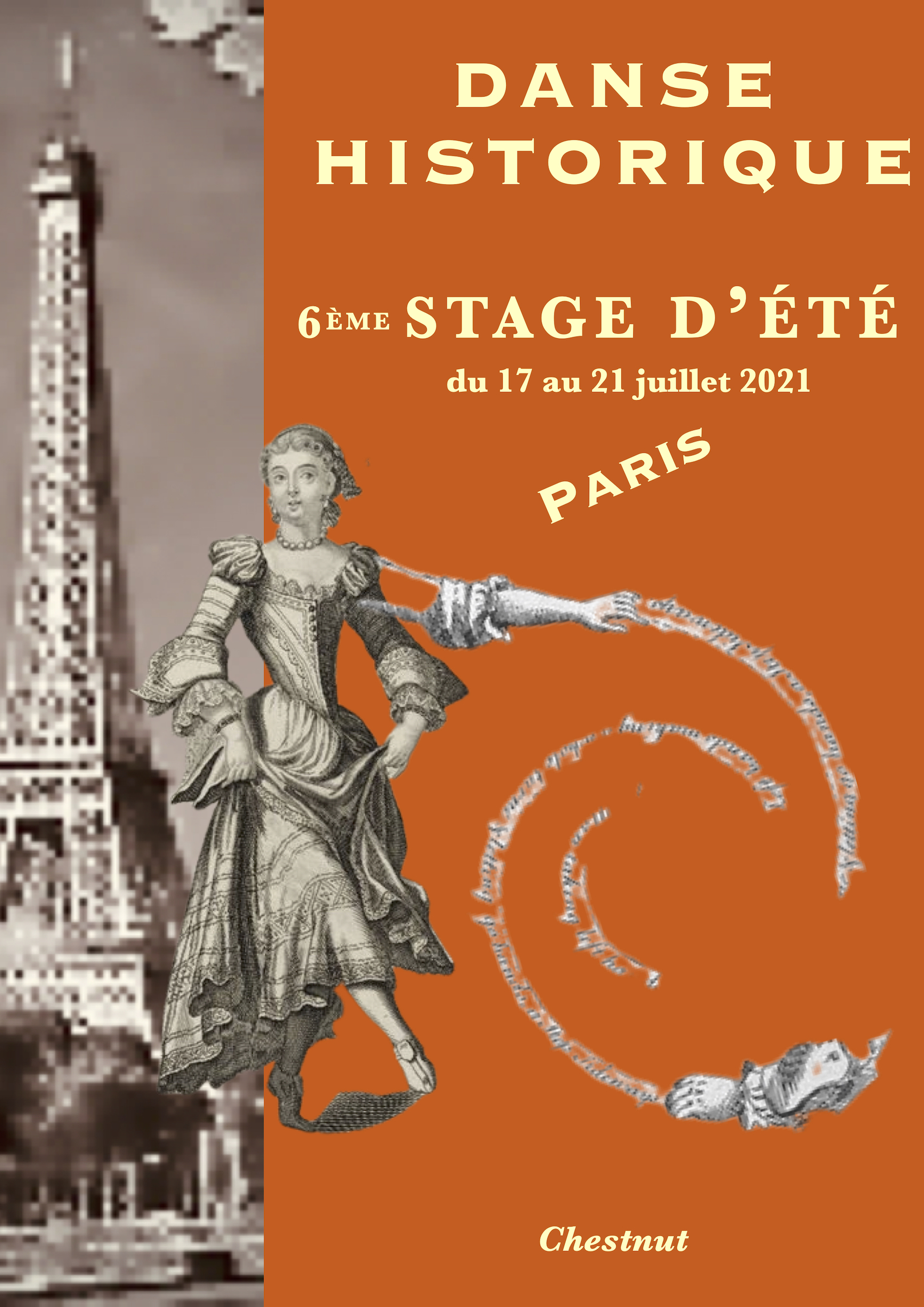
Due to the current health crisis and despite our attachment to the Tapis Vert in Normandy and the welcome of Jean Galodé, its director, the 6th edition of the summer courses of historical dance organized by CHESTNUT will take place this year in Paris.
A good opportunity to experience Paris differently ! ....
This 6th edition retains all the advantages that make the success of these Summer Courses for 5 years! :
- 2 courses, 2 repertoires, 3 workshops
- the possibility to build your program according to your tastes and your energy. According to your wishes, you can concoct an intensive program (with a maximum of 6 hours of lessons/ day) or alternate in your day the moments of workshop with moments of relaxation or visit in Paris or its surroundings.
- studios adapted to the practice of dance
- a training place close to many cultural sites (Micadanses studios are close to the City Hall)
Please find all détails on chestnut website

2. Schedule
4. Instructors
5. Location
6. Fees
8. Registration
9. Contact
10. Flyers
PERIODS and CONTENTS
1. COURSE n° 1 from Saturday 17 to Wednesday 21 July
- 1. English Country Dances / Cécile Laye (Chestnut)
- 2. Baroque dances / Irène Feste (Danses au (Pas)sé)
2. COURSE n° 2 from Tuesday 27 July to Saturday 31 July
- 1. English Country Dances / Cécile Laye (Chestnut)
- 2. Baroque dances / Pierre-François Dollé (HéliosKine)
WORSHOPS' DESCRIPTION

COURSE n° 1 from Saturday 17 to Wednesday 21 July
1. English Country Dances (3 hours / day) / Cécile Laye
The workshop will again give us the opportunity to celebrate the incredible richness of the repertoire of English figure dances which have contributed so much to the history of ancient dance and which have reinvented themselves regularly from the 16th century to the present day.Programme: "Homonymous dances"
They are dances using the same music for different choreographies from ancient and modern repertoire: Le Basque (Cécile Laye); Kneeland Romp (Gary Roodman);Virgin Frolick (The Dancing Master, 1710);Hand to hand (Gary Roodman); The Merry Milkmaids (The Dancing Master, 1651 and 1728 versions) ; A trip to Macclesfield (Brian Wedgbury); An Enchanted Place (Antony Heywood); two versions of Drapers Gardent (The Dancing Master, 1706) including one in menuet steps.
and / or
2. Baroque dances (3 hours / day) / Irène Feste
Programme: "Unique choreographic scores"
- Entrée de l’Amiral de France en 1756 par M. Dupré (FL/Ms20.1/01)
- La Nouvelle Bourrée des Princesses par M. Rameau (FL/1728.1/14)
The singularity of these scores comes from the fact that they are the only dances choreographed, respectively by M. Dupré and by Pierre Rameau, which have reached us to this day.
Each of these choreographic scores is in a collection to learn the art of writing or describing dance.
After Raoul-Auger Feuillet’s “Chorégraphie….” in 1700, other dance masters tried to write a method.
La Bourrée des Princesses by Mr. Rameau, a dance for a man and a woman, is featured in the “Abrégé de la nouvelle Méthode dans l’Art d’écrire ou de tracer toutes sortes de Danses de Ville…” , by Pierre Rameau, published in 1728.
The Entrée de l'Amiral de France by M. Dupré, is described and noted in the “ Méthode pour apprendre de soi-même la Chorégraphie, ou l’Art de décrire…” , de Dupré, Maître à danser au Mans, published in 1757.
This is a ballet entrance for a man, quite approachable for a woman!
We will also see together that there is a surprise.

COURSE n° 2 from Tuesday 27 July to Saturday 31 July
1. English Country Dances (3 hours / day) / Cécile Laye
The workshop will again give us the opportunity to celebrate the incredible richness of the repertoire of English figure dances which have contributed so much to the history of ancient dance and which have reinvented themselves regularly from the 16th century to the present day.Programme: "From the Grand Square to the Square of Mahony"
From the old and modern directories, we will work on the evolution of a figure from the 17th century to the present day.The program will allow dancers to work with different aesthetics and proposals. The following dances will be included: Hunsdon House (The Dancing Master, 1670); Little Hunsdon (Pat Shaw); Les Lanciers (Alexander Strathy version, 1822); La Beaudri (La Cuisse, 1762);Cupid’s Garden (Marjorie Heffer); Play to win (Antony Heywood); Mary K (Gary Roodman)
and / or
2. Baroque dances (3 hours / day) / Pierre-François Dollé
Programme: "Les Caractères de la danse, fantaisie musicale de Jean-Fery Rebel"
After a gentle warm-up, mixing a moment of relaxation and body reconnection with progressive stretches, we will tackle together the technique of the «Belle Dance», returning to the fundamentals of all the steps necessary for the easy practice of this technique.
In a second time, we will explore the famous «Caractères de la danse», musical fantasy of Jean-Fery Rebel, a kind of exercise of style, which unfolds, like a thread of Ariane, most of the dances of ball and theatre in use in the first quarter of the eighteenth century.
After a prelude allowing the customary reverences, we will have pleasure to dance the Courante, the Menuet and the Bourrée, ball dances par excellence, then to travel in a lively and dense Chaconne, a Sarabande, a Gigue, a Rigaudon, a Passepied, a Lourre, a pastoral Musette to finish with an Italian Sonata, a sort of window open to a new fashion to come
These Characters of Dance were performed by many artists in the 18th century, including the dancers Marie Sallé and Marie-Anne de Camargo, who choreographed and danced them on the French and English stages in particular.
When Marie Sallé moved the audience with her sensitivity and charm, the Camargo impressed the Parisian public with its mastered technique, its jumps and its chats!
It is this whole range of intentions and styles that, in a choreography created by myself, in an idea of progression, we will study together, for the pleasure of dance, movement and the emotions that dance gives us.
Let’s dive together into these famous «characters», mythical piece if any!
INSTRUCTORS

Cécile LAYE
Cécile Laye is CHESTNUT’s teaching and artistic director. She studied old dance forms in England with the Dolmetsch Historical Dance Society, Nonsuch History and Dance and EFDSS (English folk Dance and Song Society). She worked in particular under such famed teachers and researchers as Anne Daye, Anne Cottis, Peggy Dixon, Ethyl Anderson, Marjorie Fennessy, Tom Cook and Alan Davies. In France she studied with Francine Lancelot, Andréa Francalancci and Barbara Sparti. At the end of the eighties, she founded AMARILLIS, a dance company meaning to bring to the public figure dances of the Stuarts’ time and the English inheritance, as well as some aspects of history and literature, with the collaboration of musicians and singers. AMARILLIS was replaced by CHESTNUT in 1998. CHESTNUT took over its predecessor’s artistic activities (creating dance and theatre shows), its teaching (preparing dancers for Balls through a rich program of workshops and classes) and its publication ones (CDs, dance descriptions, articles on Playford and modern dances). Over the years, Cécile LAYE has build up a strong experience as a dancing master and ball caller (French Renaissance balls/ English figure dances balls, or a mixture of both). She can pass on her taste for and pleasure in elegant dancing to beginners as well as seasoned dancers. Besides her activities in the field of dancing, Cécile Laye studied dramatic art and staging, graduating at Cours Florent. She also graduated at Eva Ruchpaul’s Yoga Institute and the Paris school of Gestalt-therapy. She played Shakespeare, Molière and Marivaux in Paris and elsewhere in France and takes part in creating new plays and shows, for children in particular. She draws on both sides of her extensive training, physical and artistic, to develop her teaching method. Her constant aim is to understand the needs of a given group and of each person making up the group, to build up a class so that each person gradually understands the dance, becomes aware of his/her body and its expressive capacities, be it during a lesson, a ball, or on stage.

Irène FESTE
From an early age, Irène Feste trained in classical dance with J. Pelletier, Y. Meyer, S. Prince and M. Denard.After a Master Engineer in Telecommunications and Networks and her Diploma of teacher of Classical Dance, she discovered Belle Dance and Baroque Eloquence awith the Cie L'Eclat des Muses de C. Bayle (Le Ballet de la Merlaison).She was introduced to the Italian Renaissance style with B. Sparti and G. Giordano. She is a performer in France and at the International for: Divertimenty, Les Corps Eloquents, Le Baroque Nomade, La Tempesta, Doulce Mémoire, Il Ballo and is choreographer-interpreter of Cie Fantaisies Baroques, co-founded with P.-F. Dollé (Danceries en Fables, L'Ile des Esclaves, 1717: Les Honneurs faits au Tsar, Métamorphoses - le Chat Botté...) In 2013 and 2019, she choreographed for director Pascal Ruiz: Le Masque d'Or, Le Secret des Mémoires. In 2015, she participated in the BBC’s The King who invented Ballet, for the tercentenary of the death of Louis XIV. Artist performer, choreographer and dancing master, through her research (Centre National de la Danse - Aide à la Recherche et au Patrimoine en Danse 2013,  2014, 2016, 2020), she contributes to the diffusion of ancient dance, from the sixteenth to the nineteenth centuries, during workshops in France and Europe, pedagogical and choreographic actions in schools and conservatories.
Since 2020, she has been choreographer and performer of the company Danses au (Pas)sé(Le Ballet des 5 Sens, a young audience performance).

Pierre-François DOLLÉ
Pierre-François Dollé, after a multidisciplinary training at the Balettakademie in Cologne, he danced very contrasting repertoires within different companies which led him to work, among others, in Germany and England. Back in France, he obtained his DE as a dance teacher and crossed paths with Christine Bayle, with whom he created many ballets. He also dances for the company l'Eventail, and works with many choreographers, directors and conductors of the baroque stage. In various styles, he now has a sustained activity of choreographer, notably in collaboration with the company Cracovia Danza, the Arts Florissants or for productions in Japan, United States and Germany. He founded Cie Fantaisies Baroques, with Irène Feste, in 2007. In 2013, 2014, 2016 and 2020, he obtained the Aid for Research and Heritage in Dance from the Centre National de la Danse for research on dances from the early 17th century and on Empire and pre-Romantic styles.
All our instructors are PRO DA members :

LOCATION
Located on rue Geoffroy l'Asnier in the 4th arrondissement of Paris, Micadanses studios are equipped and made available to amateur and professional dancers to host rehearsals, workshops, workshops and other meetings around dance.
FEES
Teaching Fees (€/pers.) :
1 workshop (15 hours) : 195 €
2 workshops (30 hours) : 360 €
HOW TO GET THERE
Micadanses studios are located at different numbers on Geoffroy l'Asnier Street. Numbers and access codes will be communicated to you later after your registration.
REGISTRATION
Registration confirmation is confirmed by returning the registration form together with the amount of the deposit.
Registration form COURSE n° 1 (July, 17 to 21): Course n° 1 Registration Form
Registration form COURSE n° 2 (July, 27 to 31): Course n° 2 Registration Form
CONTACT
contact@chestnut.fr ou 0033 660 222 321
FLYERS
- Workshop
- Summer School
- Tudor
- Baroque
- Playford
- 19th century
- Quadrilles
- Regency
- mixed
- All levels
Online Lectures on Practical Dance History of the 15th to 19th Centuries in 2021 – Munich Online Lectures on the History of Dance Practice
The Förderverein für historischen Tanz e.V. (Association for Supporting Historical Dance) in Munich invites interested persons to participate by Zoom in a 2021 Online Lecture on Practical Dance History:
Hubert Hazebroucq (Paris): Beyond the Rules of "Cadence" – Intercadence and Contrecadence in Theatrical Notated Repertoire Saturday, 6 February, 7 pm
Those interested can request the Log-In information with Giles Bennett by
email: gbdeat-foerderverein@yahoo.com.
-- Deutsche Version --
Online-Vorträge zur praktischen Tanzgeschichte des 15. bis 19. Jahrhunderts 2021 – Munich Online Lectures on the History of Dance Practice
Der Förderverein für historischen Tanz e.V. aus München lädt hiermit zu unserem ersten Online-Vortrag zur praktischen Tanzgeschichte in 2021 per Zoom
ein:
Hubert Hazebroucq (Paris): Beyond the Rules of "Cadence" - Intercadence and Contrecadence in Theatrical Notated Repertoire Samstag, 6. Februar, 19 Uhr
Interessenten können die Einwahldaten bei Giles Bennett über die Emailadresse gbdeat-foerderverein@yahoo.com erfragen.
- Workshop
- mixed
Dance&History Online-Tanztage
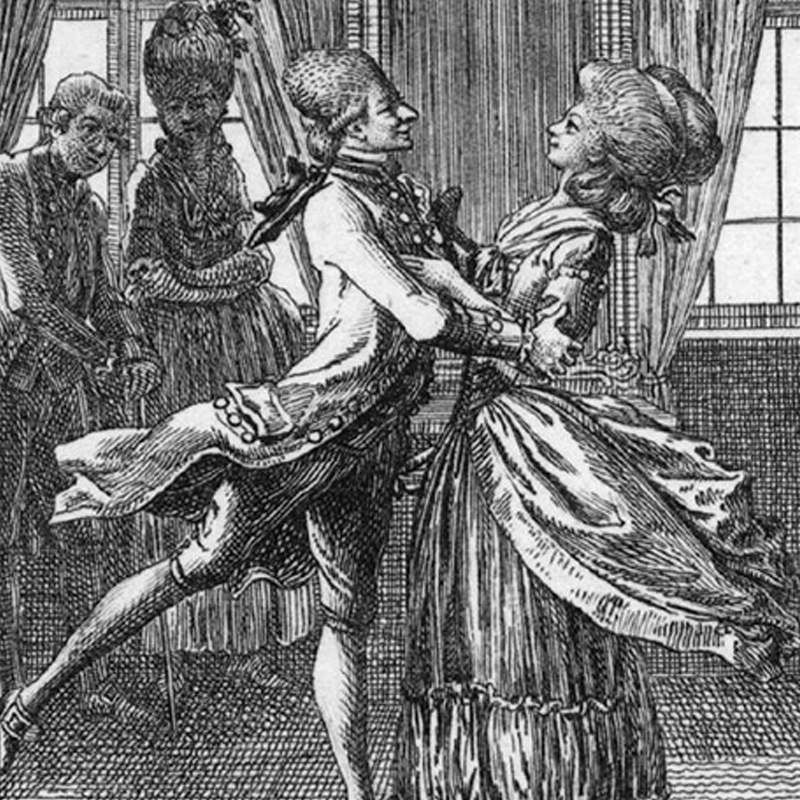
Mit unseren Online-Tanztagen wollen wir ein Schlaglicht auf die Entwicklung des Tanzes im deutschsprachigen Raum über drei Jahrhunderte werfen. Von den Festen und Bällen der Habsburger im frühen 17. Jahrhundert spannen wir den Bogen über frühe "Contratänze" auf der Bühne und dem Fastnachtstreiben am Dresdner Hof bis hin zum ersten „Fundamentaltanz“ des Barock, die Courante. Am zweiten Tag erhalten wir Einblick in die zahlreichen Tanzquellen im 18. Jahrhundert, eine der bekanntesten Regisseurinnen für Barockopern erzählt uns von ihrer Arbeit, wir hören vom „polnischen Tanz“ in Deutschland und beschließen den Tag am Stuttgarter Hof mit den umfangreichen Notizbüchern des Tanzmeisters Michel Saint Léon.
Neben Vorträgen sind auch Tanzdemonstrationen, ein Interview und abschließende Diskussionen mit den Tagesreferenten vorgesehen.
Die Beiträge werden mitgeschnitten und sind für registrierte Teilnehmer noch einen Monat auf YouTube abrufbar.
Mehr unter https://danceandhistory.org/de/aktivitaeten/dance-history-online.html
- Workshop
- Conference
- Baroque
- Early Baroque
- mixed
*NEW FOR SUMMER 2021* Online Wednesdays - "Dance Through The Ages" classes with Philippa Waite
Dance Through the Ages
From the Middle Ages to the Early Twentieth Century, including The Elizabethan ans English Regency periods.
Wednesday evenings, 8:15 to 9:15pm (UK time)
April 14th & 28th; May 12th & 26th; June 9th & 23rd; July 7th & 21st; August 4th.
Payment can be made in GB pounds, Euros or US Dollars, by UK cheque, PayPal or bank transfer.
For further information please contact Philippa: philippa@ukbaroquedance.com
- Ongoing classes
- mixed
- All levels
Nonsuch History & Dance – Online Club
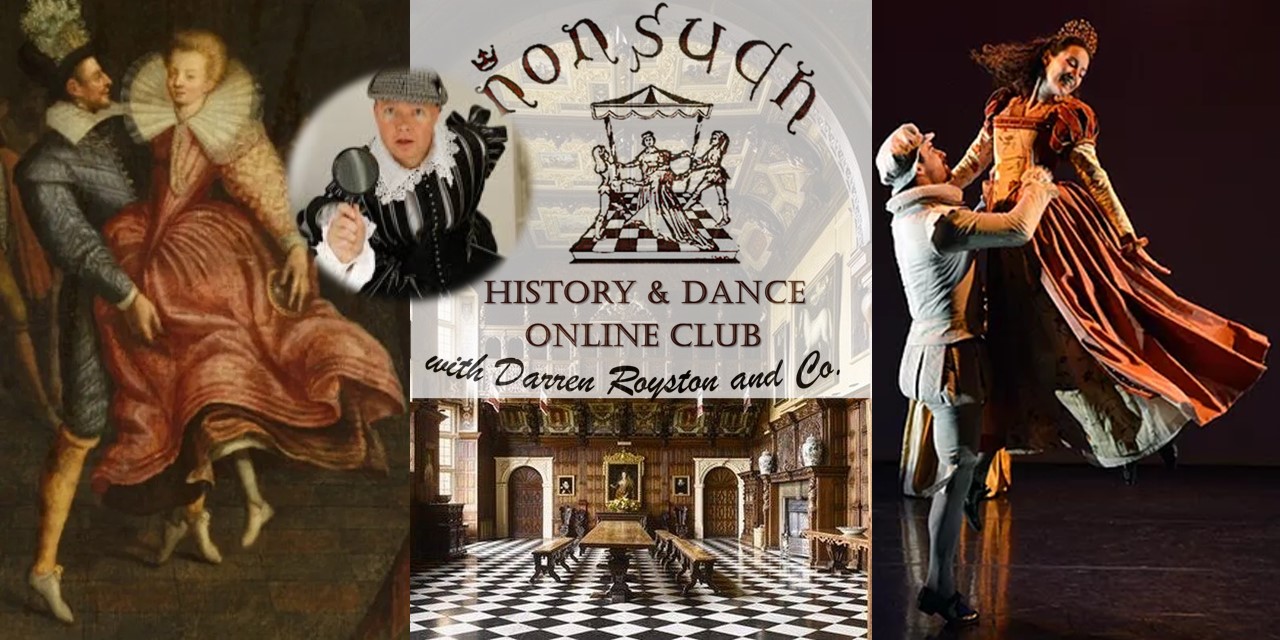
From Fall to Spring: six months for studying six centuries of dance!
Starting in October 2020!
Join Darren Royston, celebrated choreographer and teacher, for online sessions exploring historical dances from medieval periods to the nineteenth century.
Darren, together with guest teachers, artists, specialists, and friends, will recreate historical dance using music, paintings, costumes, history and drama from different periods.
From Fall to Spring will move through historical periods and learn the early dance essentials based on latest research and the Nonsuch repertoire, as published in Peggy Dixon’s “Dances from the Courts of Europe” and Darren Royston’s “Dramatic Dance.”
How the Online sessions work
Two hours dance classes including physical warm-ups, Laban-based movement training exercises, a historical dance technique class with a demonstration of original choreographies and finishing with a discussion as a chance to chat and socialise.
Intense dance instruction will take one hour of the two-hour session with the option to get a feedback from the instructor.
Sessions are open to beginners – as each class explores the basic of a historical style, with examples of the period, discussion of the art and people of the time.
Notes will be provided one week in advance before the class, and some preparation of reading, online surfing, listening to music, and studying dance and art samples is recommended between the classes.
HOW TO BOOK
Tickets are bookable from EVENTBRITE
Admission: £10 per class / £8 for Members of NONSUCH HISTORY AND DANCE
Membership of NONSUCH costs £18 per year.
Members will receive a code for reduction when booking.
Bursaries are also available: please contact NONSUCH for further details.
Contact: info@nonsuchdance.co.uk
2020 Series One (5 classes over 3 months)
SESSION 1 Sunday 25th October: Medieval Realms: Estampie & Basse Danse.
SESSION 2 Sunday 15th November: The Italian 15th Century Renaissance: the Dancing World of Leonardo da Vinci.
SESSION 3 Sunday 29th November: Elizabethan England and the Art of Orchesography: Lascivious La Voltas.
SESSION 4 Sunday 13th December: Renaissance Revels: 16th & 17th Centuries Italian Dances and the Jacobean Court.
SESSION 5 Sunday 27th December: Christmas is Restored: Revels for All
2021 Series Two (5 sessions over 3 months)
SESSION 6 Sunday 10th January: The King is Dancing: Dances from 1660 – 1715.
SESSION 7 Sunday 24th January: Enlightened Dance: Dances from 1715 – 1790, including Scottish Golden Age.
SESSION 8 Sunday 7th February: Jane Austen Dancing: Bouncing Cotillions!
SESSION 9 Sunday 21st February: Regency Ballroom: or the Art of being Improper.
SESSION 10 Sunday 7th March: Dancing with Queen Victoria: the Close Embrace.
SESSION 11 Sunday 21st March: THE FINAL “ONLINE” Spring Equinox BALL
- Course
- mixed
- All levels
Playford - Then and Now - An Online Festival on Zoom
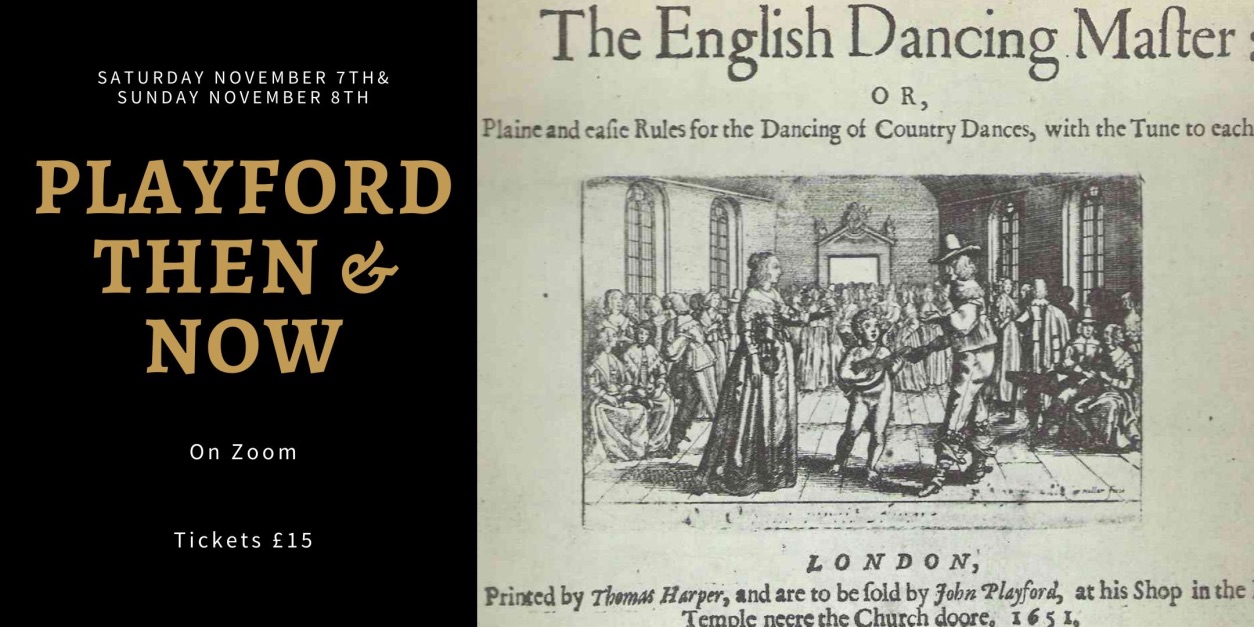
Playford – The ‘Why’ and ‘How’ of his continuing success today through dances, bands, his London, his contemporaries, and choreography
About this Event
Following the success of the HDS Webinar Talks and the Online Dance Tutorials – both of which can be found on our YouTube channel – we’re delighted to announce the HDS Playford Weekend Festival – Playford, Then and Now. The enduring popularity of Playford dances and their music from the first edition published in 1651 to the 18th edition in 1728, is a treasure chest for folk dancers, historical dancers, musicians and researchers. Festival sessions will feature talks on a variety of related topics as well as a dance workshop, with renowned speakers from the UK and overseas.
Saturday 7th November 2020
- 12 noon GMT (London) Introduction
- 12.05–13.05 Playford’s London
Speaker: Tamsin Lewis - 13.15–14.15 The New and (possibly) Improved English country dance in the later 1600s
Speaker: Ann Hinchliffe - 14.25–15.25 Of Playford’s Contemporaries: Two Seventeenth-Century ECD Manuscripts at Harvard
Speaker: Aaron Macks - 15.35–16.35 Interpreting and composing dances in the 21st century
Speaker: Colin Hume - 16.45–17.45 Workshop: Contrasting styles of performance in the first edition
Speaker: Charlotte Ewart - 17.45 Q&A
- 18:30 End
Sunday 8th November 2020
- 12 noon GMT (London) Introduction
- 12.05–13.05 What is a ‘Country’ dance?
Speaker: Anne Daye - 13.15–14.00 A Dance Band for Playford
Speaker: Jeremy Barlow - 14.10–15.10 A Song for ‘Jamaica’
Speaker: Susan de Guardiola - 15.20–16.20 The Fallibroome dances from Bernard Bentley
Speaker: Martyn Harvey - 16.30–17.30 Playford, the Player: Choreographic Concepts as Dramatic Dance
Speaker: Darren Royston - 17.30 Q&A
- 18:00 End
Get your ticket from Eventbrite (opens in new window/tab).
Programme In Detail
Saturday 7th November 2020
12.05–13.05 Playford’s London
Speaker Tamsin Lewis
There is music for hundreds of dances in Playford’s publications (the multiple editions and volumes of The Dancing Master, and Apollo’s Banquet), and these include a large number named after specific places. Some, like St Martin’s Lane, Mayfair and Piccadilly are easily identifiable to us today. Others like Mulberry Garden and Millfield (now Buckingham Palace and Liberty’s) have changed beyond recognition. In my talk, I will use Playford’s dances to map out the London that Playford and his family knew.
Tamsin Lewis Tamsin studied violin at the Florence Conservatoire and read Classics and Italian at Oxford. She has written, arranged, directed and played music for many theatre productions, as well as her work for television and radio. She is a member of the Lions part Theatre Company providing music and costume for many of their productions, and frequently appearing in their festivals as a violin-playing bear. She has published a number of books with Rondo Publishing, and is currently working on a series of books on John Playford’s London.
13.15–14.15 The New and (possibly) Improved English country dance in the later 1600s
Speaker Ann Hinchliffe
The dances in Playford’s Dancing Master show radical changes after Charles II was restored to the throne in 1660. The talk will suggest how these were due to the newly-fashionable French culture, discuss steps and formation, and suggest how ‘English’ the dances still were.
Ann Hinchliffe
Ann has been a keen folk dancer since age seven, and later took up Morris dancing, barn dance calling and playing in ceilidh bands. Ann was always curious about the links between all these, so when as a young teacher (specialising in language) she saw Anne Daye’s course Introduction to Tudor Dance for Teachers, she leapt at it. That ignited a flame for historical dance, and she’s happily ended up researching, teaching in festivals, running historical dance groups, and editing the Historical Dance Society newsletter (with lots of cheerful help from fellow dancers).
14.25–15.25 Of Playford’s Contemporaries: Two Seventeenth-Century ECD Manuscripts at Harvard
Speaker: Aaron Macks
John Playford’s The English Dancing Master is obviously the most successful Country Dance manual of the 17th century and the only printed source of its kind to have survived to the present. Several fragments of handwritten manuscripts survive with dance instructions, but until twenty years ago, no large collections were known. Since then, however, two small booklets have surfaced in the Houghton Library at Harvard University, one from circa 1649 and the other from the late 1660s. This presentation will introduce these two manuscripts, their physical codicology and their content, both as stand-alone sources for English Country Dance and as evidence for traditions outside the Playford inheritance.
Aaron Macks
Aaron Macks is a systems architect with Harvard Business Review and a sometime teacher of country dance. In addition to publishing an edition of the Ward Dance Manuscript, he works on CoKL: Corpus Kalendarium, a digital tool for analyzing the devotional calendars in Books of Hours. His previous researches included automated parsing of Akkadian verb-forms and clustered supercomputing.
15.35–16.35 Interpreting and composing dances in the 21st century
Speaker Colin Hume
John and Henry Playford published dances in the 17th century. What is their relevance to the 21st century? What changes should we make to these dances to ensure their continued use, and what is the status of new dances composed in this style?
Colin Hume
Colin Hume has been interpreting country dances for over thirty years, and believes in being as faithful as possible to the originals while still producing versions which people will enjoy dancing. He also composes his own dances and tunes in various styles, and will explain his methods and philosophy. He is well-known in England and North America as a caller and dance writer, and his website colinhume.com contains a wealth of dance-related material.
16.45–17.45 Workshop: Contrasting styles of performance in the first edition
Speaker Charlotte Ewart
Should you hop or should you step? Should you skip or should you walk? We know what we are meant to be doing, but do we know HOW we are meant to be doing it? And HOW we do it, does matter. A quick search through the now plentiful clips on the web will see the same written steps performed in many different contrasting styles – sedate, lively, high status, low status.…
This workshop will examine how the same steps can be danced, performed and presented in different ways. It will explore the influence that the choice of music, instrument and tempo has on the ‘how’ and finally discuss the issues the choice of style raises taking in to account both the context of the time these steps were written and the time we are now dancing them in. Who danced them then and now, why do we dance them and does that effect the ‘how’?
Charlotte Ewart
Charlotte trained in classical and contemporary dance. She has a BA in History and Dance and an MA in Dance, and her thesis was researching and reconstructing the 13th century Estampie. Charlotte is a qualified teacher working across all age groups teaching Dance and Drama. Charlotte is currently an Associate Artist for Historic Royal Palaces, lecturer in performing arts at Crawley College and Period Dance teacher at the London Dramatic Academy. In her professional life Charlotte has worked with a wide variety of prestigious organisations including English Heritage, Bristol and Cambridge Universities, as well as Time will Tell Theatre, The History Channel and most recently a number of productions for the BBC, Britain’s Christmas Story with Gareth Malone, Danny Dyer’s Right Royal Family and A Merry Tudor Christmas with the historian Dr Lucy Worsley. In recent months Charlotte has transferred her skills online with HDS and other online dance conferences.
Sunday 8th November
12.05–13.05 What is a ‘Country’ dance
Speaker Dr Anne Daye
My talk will explore the country dance in its social and dance-historical contexts in order to tease out the essential features of this staple of English dancing. A set of questions will be raised. Why did the country dance emerge in the mid-sixteenth century? Why was this group of varied dances recorded by Playford 1651 known as ‘country’ dances? Why was it so successful for so long? Why did the French like it, and how did it affect their dancing? Who danced it? And finally how ‘English’ was it?
Dr. Anne Daye
Dr. Anne Daye is a dance historian who teaches, lectures and publishes widely. Formerly Chairman, she is now Director of Education and Research for the Historical Dance Society. Her special field is the Tudor and Stuart masque in the context of Renaissance dance in France, Italy and Britain. This talk arises from current research into dancing in the age of Jane Austen.
13.15–14.00 A Dance Band for Playford
Speaker Jeremy Barlow
‘A Dance Band for Playford’ examines the the kind of line-up that would have played for balls that included country dancing in the 17th and 18th centuries. The session will start with images and then go on to recordings of groups playing Playford on original instruments, to see if they follow the iconographic evidence.
Jeremy Barlow
Jeremy Barlow has been interested in Playford’s country dances since he founded the Broadside Band in 1979. He has made many recordings featuring Playford material, and his edition The Complete Country Dance Tunes from Playford’s Dancing Master, 1651-c.1728 has been in print since 1985.
14.10–15.10 A Song for ‘Jamaica’
Speaker Susan de Guardiola
In the century and a half since William Chappell identified half a dozen songs and ballads associated with the tune ‘Jamaica’, published in the fourth through eighteenth (1670-1728) editions of Playford’s The Dancing Master, his conclusions have been both uncritically accepted and sternly disputed without any particular new evidence either way. Recent discoveries and advances in ballad cataloguing permit both a reexamination of the common assumptions about connections between these songs and associated tunes and dances and the identification of unresolved questions and approaches for further study.
Susan de Guardiola
Susan de Guardiola (BA, Yale University; MSEd, University of New Haven) is an independent scholar in social dance history who pre-pandemic divided her residence between the USA and Russia. She has presented her work at conferences and dance festivals including the Historical Dance Society’s On Common Ground, the International Congress for Medieval Studies, and Stanford University Historical Dance Week. In 2013-2014 she conducted research at Harvard University as a New England Regional Fellow. Her research interests extend from the 15th century through the early 20th century and beyond the ballroom to the social and cultural contexts of social dance and its connections with music, literature, and theatre.
15.20–16.20 The Fallibroome dances from Bernard Bentley
Speaker Martyn Harvey
In the Fallibroome Collection, Martyn will take a look this legacy from Bernard Bentley and his booklets published between 1962 and 1980. It will include some background on Bernard Bentley, explanations and demonstrations. In an hour I’ll probably have time to cover just a couple of the dances certainly ‘Huntington’s Maggot’. There will be some work on the timing of moves so that dancers reach the position that they should reach in time with the music, and also ensuring that you’re facing the direction you need to be facing in readiness for the next move – an art in itself. All this interspersed with the opportunity to get up and actually dance. That gives dancers the challenge to put these points into practice with a view to making the music visible!
Martyn Harvey
Martyn grew up experiencing the tutelage of lauded names such as Tom Cook, David Anderton, Ken Alexander and Nibs Mathews between 1973 and 1986. During those formative folk dance days he found that he identified closely with Bernard Bentley, the author of the 6 small booklets publishe. Martyn’s an out and out dancer who has always looked to listen to the music and its phrasing and believes that these dances deserve to be danced with style, feeling and a sense of joy.
16.30–17.30 Playford, the Player: Choreographic Concepts as Dramatic Dance
Speaker Darren Royston
How can Playford’s English Dancing Master offer instruction to drama students training in the art of movement? What can this dance form teach about spatial awareness, narrative development, and social interaction? What inherent meanings can be extrapolated from the steps, syntax, and structure of published movement patterns? What happens when social dances are placed in the context of drama: for example, in theatre, TV and film? What concepts can be used choreographically to create an aesthetic style, establish semiotic signifiers, or suggest sexual politics on the dance floor?
Darren Royston
Darren Royston works internationally in theatre, opera, film and TV as a choreographer, movement director, dance consultant and director. First studying dance in Shakespeare at Cambridge University, he received a distinction award in Dance Studies from Trinity Laban, before training in early dance with many of the leading teachers in the UK, Europe and USA, including being mentored by choreographers Geraldine Stephenson and Gillian Lynne. Having become assistant to Peggy Dixon, he was appointed artistic director of Nonsuch History & Dance in 2005, and continues to teach and mentor students, working for two decades at drama schools and music colleges such as London’s Royal Academy of Dramatic Art (RADA). In the UK, Darren has been appointed dance consultant at the National Theatre, the Old Vic, Royal Shakespeare Company, and choreographed for many theatre and opera companies. Publications include Dramatic Dance- An Actor’s Approach to Dance as a Dramatic Art (Bloomsbury Methuen RADA).
Tickets at £15 for the whole or part of the weekend from https://www.eventbrite.co.uk/e/playford-then-now-festival-tickets-12107…
- Conference
- mixed
- All levels
Kostümverleih Jäger
- Costumes
- Renaissance
- Baroque
- mixed
Midsummer Early Dance & Music Festival
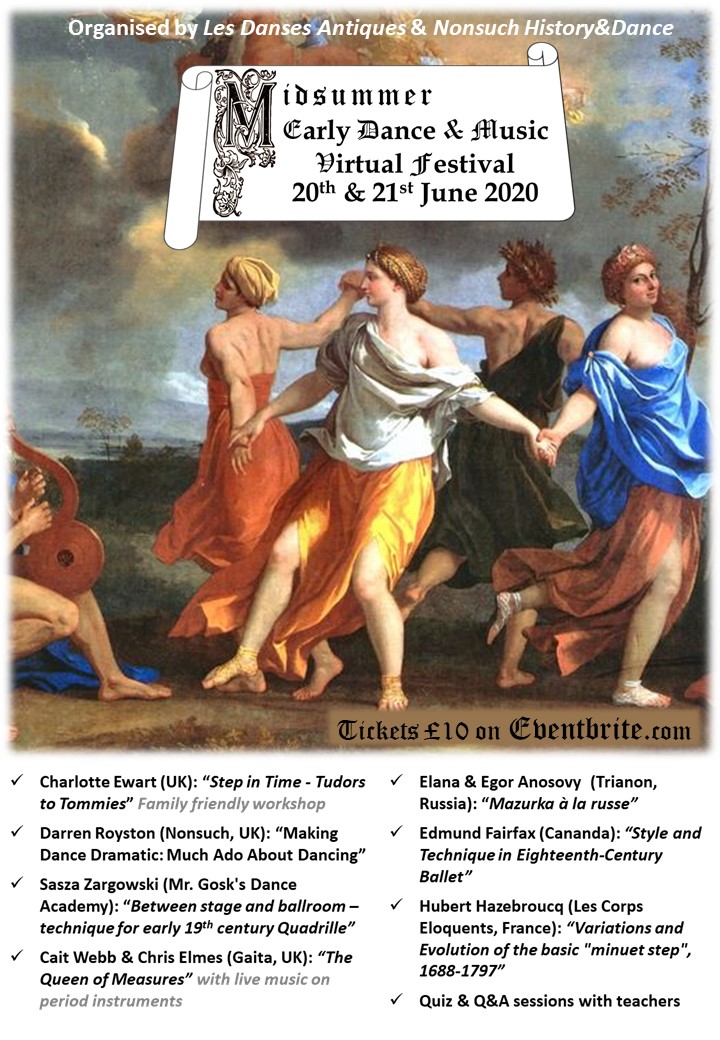
Discover the diverse world of early dance and experience the connection between movement, music, and beauty through time at this Midsummer Early Dance and Music Virtual Festival!
Midsummer Eve is one of the spirit nights of the year, when the boundaries between the worlds are the thinnest. Let’s use this magic to travel in time! Though science says it is impossible we will use dance & music as our time travel machine. During this virtual Festival we celebrate the longest day of the year with music and dance from 15th to 20th centuries.
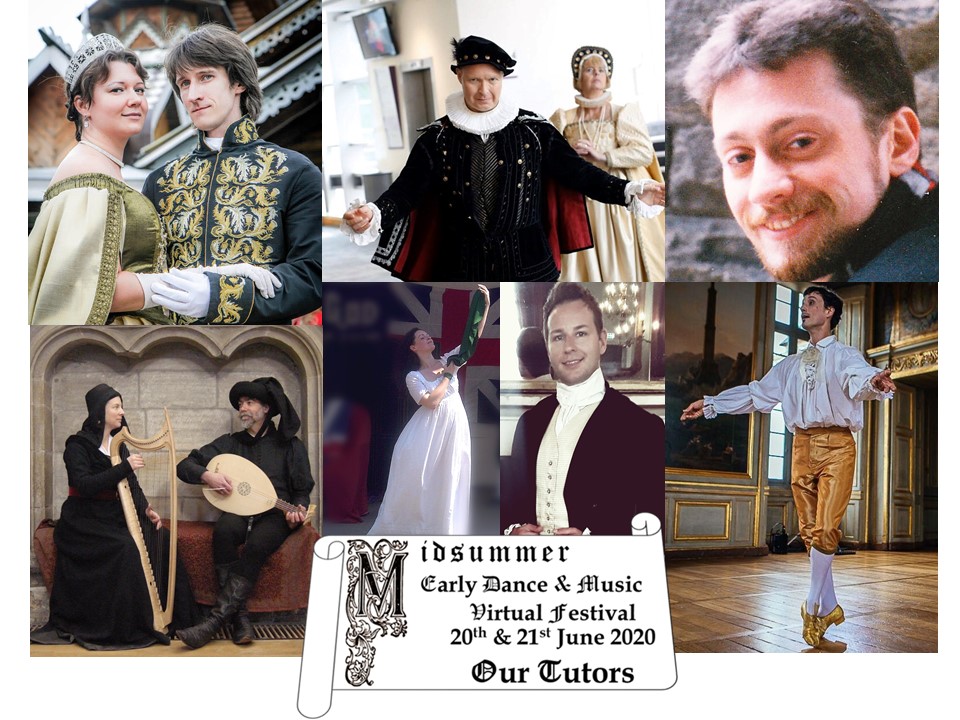
We will visit Italian Renaissance courts accompanied by ensemble Gaita and learn the connection between various steps and musical tempos with live music on period instruments. Darren Royston will transport us into the world of the Shakespearean England to connect the dance and theatre. We will travel with Hubert Hazebrouqc through the "long Eighteenth Century" with minuet to see how much its rhythms and even the movements changed. Edmund Fairfax will challenge the most common misconceptions about 18th century ballet and introduce us to dancers performing at magnificent Versailles, in iconic Paris Opera and in street as part of comedie de l'arte. We will visit the ballrooms and fashionable assemblies of Georgian Britain with Sasha Zargowski to learn the refined dance styles of the Enlightenment era. Elana and Egor Anosovy from Trianon dance school in Moscow will transport us in time and space to learn romantic and dashing mazurka à la russe. Charlotte Ewart will bring alive the convoluted history of British monarchy with her fun and accessible for the whole family session of dance. The Festival will be wrapped up with the Early Dance& Music themed Quiz and panel discussion with teachers to learn how they discovered early dance and a chance to ask your own questions.
The Festival will be held online on Zoom platform. The access link will be sent on the 20th of June.
- Workshop
- Renaissance
- Tudor
- Baroque
- 19th century
- Quadrilles
- Regency
- mixed
- All levels
Ballare nel Parco (A44)
Hallo zusammen,
wir haben nach reiflicher Abwägung und Überlegung beschlossen, die Veranstaltung zu verschieben. Auch im Hinblick auf ausreichende Angebote im Jahr 2022.
Ein neues Datum zur Veranstaltung steht noch nicht fest, ist aber bereits avisiert.
Wir werden uns aber auf jeden Fall dazu melden.
Danke für euer Verständnis, passt weiterhin auf euch auf und einen schönen Sommer 2022,
bis dahin,
liebe Grüße
Save the Date !
Wir wollen einen Workshop + Ball durch die Jahrhunderte anbieten.
Hierzu sind alle interessierten Tänzer*innen herzlich eingeladen.
Weitere Infos folgen demnächst.
In freundlicher Kooperation mit Isolde Kaiser. (iktanz.de)
- Workshop
- Ball
- mixed
- Intermediates
Von der Renaissance zum Barock - verlegt nach 2021!
Dieser Workshop ist eine Einführung in den Renaissance- und Barocktanz verschiedener europäischer Länder, besonders in Frankreich, Spanien und Italien. Die vergleichende Arbeit zwischen den Tänzen der verschiedenen Länder und der beiden genannten Epochen soll uns die enge Verwandtschaft zwischen ihnen zeigen.
Ein besonderes Augenmerk wird auf das Verhältnis zwischen Musik und Tanz gelegt. Dies ist ein wichtiges Element für die Rekonstruktion des historischen Tanzes. Dies wird für Musiker von großer Nützlichkeit für ihre Interpretation dieser Tanzstücke sein.
Wir werden folgende Schritte der verschiedenen Tanztypen ausführen :
aus der französischen Renaissance (16. Jh.) : Pavane, Gaillarde, Branle, Allemande,
aus der italienischen Renaissance (16. Jh.) : Pavaniglia, Gagliarda, Spagnoletto
aus dem französischen Barocktanz : Bourrées, Sarabande, Chaconne, Menuet (Einführung in die Grundschritte)
Dieser Workshop ist für alle Niveaus geöffnet. Jeder wird auf seinem Niveau arbeiten.
Wer Castagnetten besitzt, kann diese gerne mitbringen.
Nähere Informationen und Anmeldeformular im Flyer
- Workshop
- mixed
- All levels