EADH conference 2019: Colonial dancing in Europe, European dancing in the colonies
In association with Portingaloise Cultural and Artistic Association, and Ginasiano/Armazém22

The conference proposes an exploratory look at the migration and confluence of dance styles, forms and practices through the wide net linking European nations and their colonies worldwide.

In a dialogue between Coloniser and Colonies, what part did dancing have in the cultural exchanges between nations? What impact did they have overseas and to what extent were they absorbed?

Join us for an exciting, enlightening and unique weekend full of activities, to include the following papers:

o Jane Gingel, '"Diabolical Practices": Intercultural trends in Spanish music and dance in the 16th century'.

o Catarina Costa e Silva, '"Bayamo, bullimo cus pé..." - Dance elements in 17th-century polyphonic repertoire of Santa Cruz de Coimbra'.

o Mary Collins & Rachel Brown, 'The Canary'.

o Davide Vecchi, 'Domenico Zipoli and the dance - Dance music of an Italian Jesuit in the New World'.

o Christine Bayle, 'L'Europe Galante, between clichés and influences'.

o Tiziana Leucci, 'The Portuguese travel accounts at the origin of the Indian dancer character of the "Bayadère" in the European literature and stage plays'.

o Susan Hamlin, 'Les Indes Galantes, an opéra-ballet rediscovered: Les Sauvages on the French stage'.

o Edith Lalonger, '"Les sauteries de la petite noblesse de la Nouvelle-France"'.

o Anne Daye, 'The "National dance" of Ireland: promotion and confusion 1614 - c.1914'.

o Isabelle Calabre, 'The Quadrille, creole dance of "Toute-Monde"'.

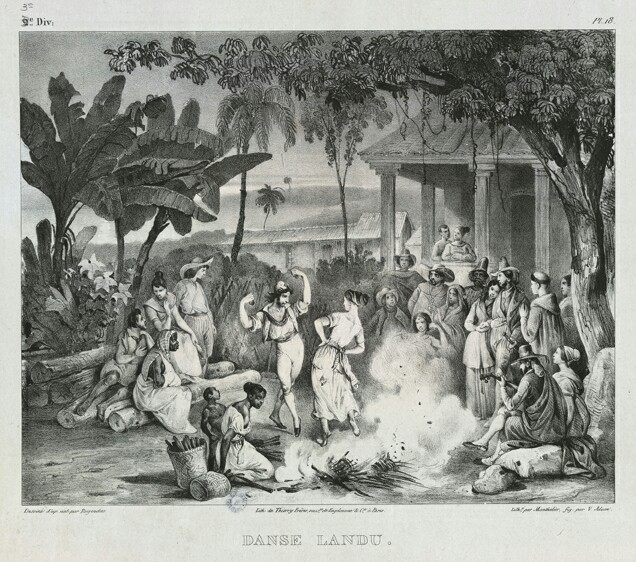
o Ricardo Barros, 'From the "Terreiro" to the "Paço" - the extraordinary journey of the Lundú over the centuries, continents and social strata'.

o Lisa Fusillo, 'Re-examining cultural identities in ballet after a hundred years: The "Spanishness" of Le Tricorne'.

o Anita Makuszewska, 'Tracing memories of submission and defiance in the Soviet ballet adaptations of Hikmet's Legend of Love and Aitmatov's Legend of Donenbai Bird - Mankurt'.

o Dorothea Sauer, 'Modern Dance in Brazil? Liselott Trinks and her Wigman Adaptations in Joinville'.

o Jane Pritchard, 'Roshanara?'.

Workshops and demonstrations:

o Jane Gingel, with Konrad Przybycien, Lenka Horlova and Blanka Ferjentsik Wernerova, 'Chacona & Zarabanda' (demo).

o Davide Vecchi, 'Dancing to Zipoli's music' (workshop).

o Tiziana Leucci, 'Indian Classical Dance' (workshop).

o Edith Lalonger, 'Danses Quebecoises' (demo).

o Ricardo Barros, 'The 19th-century Lundú Quadrille' (workshop).

o Anne Daye, 'The Irish Ceilidh' (workshop).

Schedule:

o Friday 8th November - daytime: a city tour of Porto, including landmarks, guided tour of the historical Stock-exchange building and a Baroque church trail.

o Friday pm: opening cocktail reception at Armazém22, and performance of "500 years of dancing in Portugal and its colonies" by several artists, at Convento Corpus Christi.

o Saturday 9th November - daytime: conference papers, workshops and demos at Armazém22.

o Saturday pm: conference dinner at Sandeman "The George", and performance of 'Feliz Centenário, Mr Cunningham' by students of Ginasiano Dance School, at Armazém22.

o Sunday 10th November - daytime: conference papers, workshops and demos, followed by the EADH Annual General Meeting at Armazém22.


 Download detailed schedule and abstracts here 

Conference fees include attendance to the conference proper (papers, workshops, demos, refeshments and buffet lunches), admission to performances on Friday and Saturday. Please note that City tour on Friday and Dinner on Saturday attract separate fees. Delegates are responsible for organising their own travel and accommodation in Porto.

o Conference (Friday to Sunday) and Friday city tour: €105.

o Conference only (Friday evening to Sunday): €90

o Conference, one day only (Saturday or Sunday): €50.

o City tour only: €15.

o Conference dinner requires reservation in advance, and shall be payable separately. It will be hosted at the 'Sandeman' private dining room at 'The George', offering a 3-course meal of Portuguese cuisine (vegetarian option available), including drinks and a toast with Port wine, serenaded in between courses by Fado singer Ana Ferreira and two musicians. Cost: €45 (please book via Paypal button below).


  • Workshop
  • Conference
  • Renaissance
  • Baroque
  • mixed

„Es muß ein Stück vom Himmel sein ...“

This time, E. F. D. Helmke offers us his Coq-à-l'ane, which means a silly, or incoherent chatter. This delightful and unique Quodlibet sets a Tempo di Marcia, Contredanse, Minuet, Ecossaise, Waltz, Française, Polonaiseand Galopp-quadrillein a row in their respective formations (Taschenbuch für Tänzer und Tänzerinnen auf das Jahr 1833, Merseburg).


The Polka Mazurkawill be our second highlight. This charming couples dance with its special grace and variety came into fashion around the middle of the 19thcentury. From the two-part basic step, several step combinations can be gained. The resulting figures are chosen by each couple individually, or performed together with all the other dancers.[1]Some step sequences – among them a special version, which was popular in Vienna  – complete the familiar movements of Johann Raab's L'Alliance, which according to our tradition is once again given a place of honor in the ball programm. (For those who have already learned, there will be a refresher.)


We review the 12 figures of Jean Jacques’ Redowa Polkafrom last year ("Maître de plaisir beim Tanze" Hamburg, 1869) and Jørgen Schou-Pedersen presents the five-part ConcordiaQuadrillein lines of Johann Raab "sincerely consecrated to the students of the jurisprudence" to the music of the Kapellmeister F.W. Swoboda (Prague, 1846). 


In keeping with the Viennese ball tradition, before the gala buffet we dance the Quadrille françaisewith Cotillontouren (Germans).


We are opening our dance week on February 2nd2020 at 4:00 pm again in a museum. Then go together to a ‘Heuriger’, a Viennese winegrower's restaurant. There we can satisfy our hunger and thirst and also dance. The exact addresses of the location for the daily dance lessons, museum and restaurant will be announced upon registration.


Daily classes in English will start on February 3rd, from 10 am to 4.30. 
This time in a centrally located place near the station "Wien Mitte" (U4, U3, S-Bahn 1-4, 7, tram O, bus 74A) with a possibility for a cheap lunch or a snack.


The motto of our fancy dress ball on Tuesday is “Imperial Vienna’s guests”. We start at 6.30pm (until 9.30pm high above Vienna, on Cobenzl in the foothills of the Vienna Woods again http://www.waldgrill-cobenzl.at; (Bus 38a from U4 terminal Heiligenstadt).


The Wednesday afternoon is free for individual activities.


The dance classes end on Friday around 1. p.m. to prepare for theThé Dansant(from 3 p.m. to 6 p.m.). Wearing evening dresses of the first half of the 19thcentury we can enjoy the unique Biedermeier charm in the Sträußelsäle, the last remaining dance hall in Vienna where Strauss and Lanner played for dances. The evening ends in Cafe Landtmann, the favorite Cafe of Sigmund Freud, where we can sit together and order individually food (reservation is necessery).


As in recent years, we can enjoy the incomparable ambience of the Palais Daun-Kinsky (1010 Vienna, Freyung 4) created by the famous baroque architect Johann Lucas von Hildebrandt. The oval ballroom is ideal for waltzing as much as for sets in squares and lines. An exquisite gala buffet is prepared for us in the Yellow Salon. We are looking forward to our proven ball music of the last years. (Arrival: 5. p.m. for changing and Solemn opening at 6 p.m.).


Following Viennese custom, we will have dance cards at the Ball made by Andrea. The dance program will include dances, we learned or rehearsed during the week, the common turning dances (waltzes, polkas and Galops) and some contradances as the Sir Roger or the Cotillon (Germans), which will be called.


Daily dance classes, Fancy dress Ball, afternoon Tea Dance and Grand Strauss Ball (buffets included, beverages not included):

Registration (Registration fee of 50.- € is included)                                           380.- €


Tea Dance (February 8th) and Strauss Ball (Feb. 9th(as above)                              160.-€                                

Strauss Ball (as above)                                                                                                115.- €

All venues will be NON-SMOKING!


Registration before December 7th2019 will reduce the fee from 380.- € to 343.- €.


If you wish, we can suggest hotels or pensions.Participants must make their own reservations. 

Vienna offers visitors many low cost tickets, which include admissions to museums as well as unlimited trips on its fine public transit systems (subways, trams, and busses). 

For participation for the danceweek, the Thé dansant and the Grand Straußball a registration by e-mail, mail or phone adressed to Hannelore Unfried is necessery. The registration fee of 60.- € is included in the prices above. The whole amount has to be settled until January 18th 2020. If the registration is canceled after 7.12.2019 the registration fee (60.- €) will be kept. For cancellations after 4.1.2020 half of the course fee is due.If canceled after 18. 1. 2020 no refund can be given.


Please support the grant for young persons by contributing “building blocks” of 15.- Euros. 


Hannelore Unfried


Please send your registration to: Mag. Hannelore Unfried,  e-mail: unfried@hofdantzer.at

A–1190 Vienna, Nußwaldgasse 23-25/13, mobile phone: 0043-664-404 9818, 


Name:______________________________________________________________________


Address:____________________________________________________________________


Email:___________________________________________________Tel:________________


Registering for:


m Museum

m Heurigen

m  Fancy dress ball

mDaily dance classes, afternoon Tea Dance, and Grand Strauss Ball (buffets included, beverages not included)                                                                                                  380.- €

m Tea Dance and Strauss Ball(as above)                                                                     160.-€

m Café Landtmann  

mStrauss Ball (as above)                                                                                              115.- €


Dancers participate at their own risk.


Signature:______________________________________________________Date:_________


Participants from the Euro-area please send your funds to:


Mag. Hannelore Unfried

IBAN: AT432022107201068835

BIC: SPHNAT21XXX

SPARKASSE HORN-RAVELSBACH-KIRCHBERG

From participants not belonging to the Euro-area we accept the confirmation of the flight (please send booking number) instead of the registration fee in advance (to save the conversion fees of the bank)


[1]Adam Reichert: Die moderne Tanzkunst. Olmütz 1881; François Lestienne-Dubois: Mazur, Polka und Polka=Mazur. Wien 1869; Friedrich Zorn: Grammatik der Tanzkunst. Leipzig 1887


  • Workshop
  • Ball
  • 19th century
  • All levels

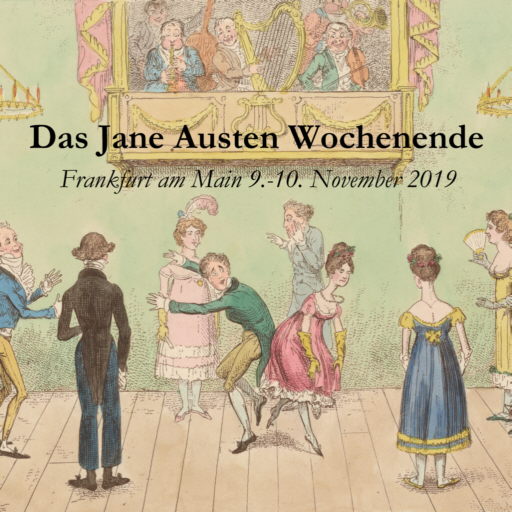
Das Jane Austen Wochenende

Beim schon fast traditionellen Frankfurter Jane Austen Wochenende nehme ich natürlich wieder die wenigen Tänze aus der Zeit aufs Programm, die wir wirklich Jane Austen zuordnen können. Einen beliebten Tanz: „Mr. Beveridge's Maggot“, der zwar nicht in die Zeit gehört, aber durch die Jane Austen Filme zu einem „Jane Austen Tanz“ wurde, möchte ich in einer neuen quellennahen Fassung ausprobieren. Ein weiterer Schwerpunkt werden an diesem Wochenende neue Tänze aus dem „Taschenbuch zum geselligen Vergnügen“ sein, die vermutlich seit rund 200 Jahren nicht mehr getanzt wurden. Kostüme aus der Empirezeit sind willkommen, aber natürlich tanzen wir ansonsten wie üblich in unserer heutigen praktischen Kleidung.

Die Zeiten sind:
Samstag 12:00-14:30 und 15:30-18:00 Uhr
Sonntag 10:00-12:30 und 13:30-16:00 Uhr

Historischer Tanz in Frankfurt 2019:
19.-20. Jan.: Das Menuett Wochenende
13. Apr.: Alpenquadrillen von 1840
18. Mai: Der Longway Tag
31. Aug.-1. Sep.: Einfache Tänze der Renaissance
12.-13. Okt.: Das Cotillon Wochenende
9.-10. Nov.: Empire: Das Jane Austen Wochenende
7.-8. Dez.: „Entrée pour une Femme – Forlane“ (1704)

Weitere Informationen finden sich auf meiner Webseite www.historische-tanzkunst.de sowie im Flyer.


  • Workshop
  • 19th century
  • Regency
  • Beginner
  • Intermediates

Workshop Barocktanz

Versailles, die glänzende Residenz des Sonnenkönigs Ludwig XIV., - mit seinen endlosen Kolonnaden, kerzenerleuchteten Zimmerfluchten und spiegelgeschmückten Prachtsälen die Verkörperung des Barocks schlechthin - wäre ohne Musik und Tanz nicht vorstellbar gewesen. Kein prunkvolles Fest, keine intime Abendgesellschaft ohne Menuette, Bourrées, Sarabanden und Contredanses. Mal heiter ausgelassen, mal ernst und leidenschaftlich repräsentierte dieser elegante Stil die ganze Bandbreite barocken Lebensgefühls im Ballsaal und auf der Bühne. Von der königlichen Tanzakademie immer weiterentwickelt wurde er schließlich zur Grundlage des klassischen Balletts. Wer Barocktanz kennenlernen und die Ursprünge des Balletts erkunden möchte ist herzlich willkommen.

Erfahrung in diesem Stil ist nicht erforderlich, allgemeine Tanzerfahrung wird jedoch empfohlen.

Zeit: 17:00-20:00 Uhr
Kursgebühr: 35,- Eur
Anmeldung bei Esther
 

  • Workshop
  • Baroque
  • Beginner