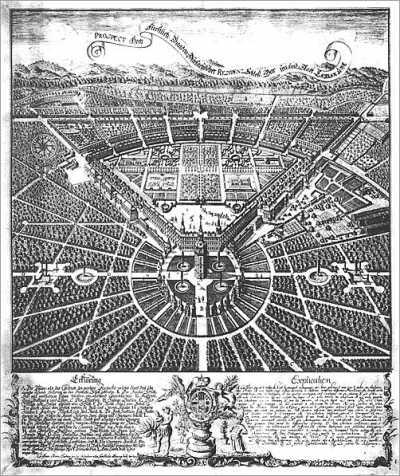
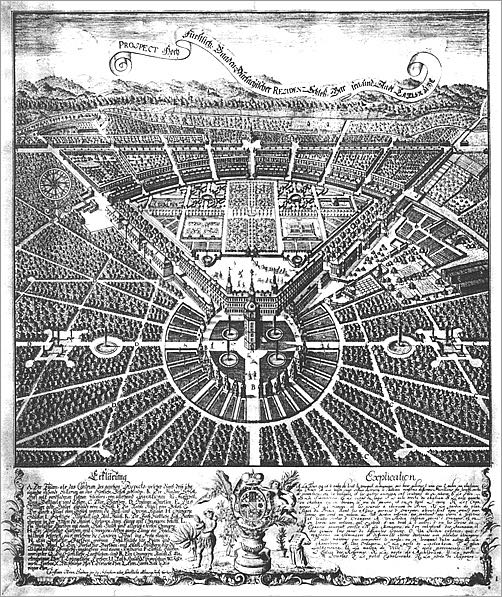
Palace Hotel Budapest (Novotel Budapest Centrum)
PrettyShepherd
Baroque Dance Workshop
In this Beginners-Intermediate Workshop we will be working on basic baroque dance steps and dance vocabulary that every respectable person, in the years around 1700, would have practiced on a regular basis with his or her dancing master.
With the aid of short step combinations and variations, the aim is to achieve a better understanding of the baroque dance step repertoire.
We will round off the day with a few country dances, giving us the opportunity to incorporate the material we have learnt during the course.
Course times: Sat 10:00-17:00 Sun 10:00-16:00
Cost :95€
Registration via Wirkstatt e.V., Karlsruhe, Germany.
Barocktanz-Kurs mit Charlotte Bell
Das Zeitalter des Barock hat Sie schon immer fasziniert? Sie wollten schon immer ein Menuett oder eine Gavotte tanzen können und sich entsprechend der damaligen Gepflogenheiten auf dem Tanzparkett bewegen?
Schritt für Schritt können Sie dies nun bei der Wirkstatt erlernen. In dem Anfänger-Intermediate Kurs unter der Leitung von Charlotte Bell werden Grundschritte und - formen des Tanzvokabulars vermittelt, die jeder respektable Mensch um 1700 mit seinem Tanzmeister geübt hat.
Wir werden uns kurzen Schrittkombinationen und Variationen widmen, um ein Verständnis für das Barocktanz-Schrittrepertoire zu gewinnen, zu erweitern und zu vertiefen.
Um den Tanztag ausklingen zu lassen, werden wir uns ein paar geselligen Kontratänzen widmen und schauen, wie manche gelernte Schritte auch hier eingesetzt werden können.
Bourée d’Achille Workshop
23. and 24.5.2020
Mit Charlotte Bell
Beginners and Intermediate
The Bourée d’Achille, choreographed by Pécour, was first published in 1700. It is one of the simplest notated dances for a couple, making it ideal for dancers at beginner and intermediate levels.
For beginners the course offers an introduction to the baroque dance step repertoire. For intermediate dancers, the opportunity to coordinate the baroque port de bras confidently with the steps.
Course times: Sat 10:00-17:00 Sun 10:00-16:00 Cost :95€
Registration via Wirkstatt e.V., Karlsruhe, Germany.
Der Bourée d’Achille von Pécour erschien erstmals 1700. Es ist eine der einfachsten, notierten Paartanz-Choreographien. Daher ist es hervorragend geeignet für Tänzer/Innen auf Anfänger oder Intermediate Niveau.
Anfänger werden die Barock Tanz Schritte kennenlernen, oder ihre Kenntnisse vertiefen und die Intermediate Teilnehmer/Innen haben die Möglichkeit ihre Port de Bras zu verfeinern.
Anmeldung bei Wirkstatt e.V., Karlsruhe, Deutschland. Contacts: Wirkstatt e.V
Wirkstatt
0721 378075
Steinstraße 23
76133 Karlsruhe Germany
See map: Google Maps
Charlotte Bell
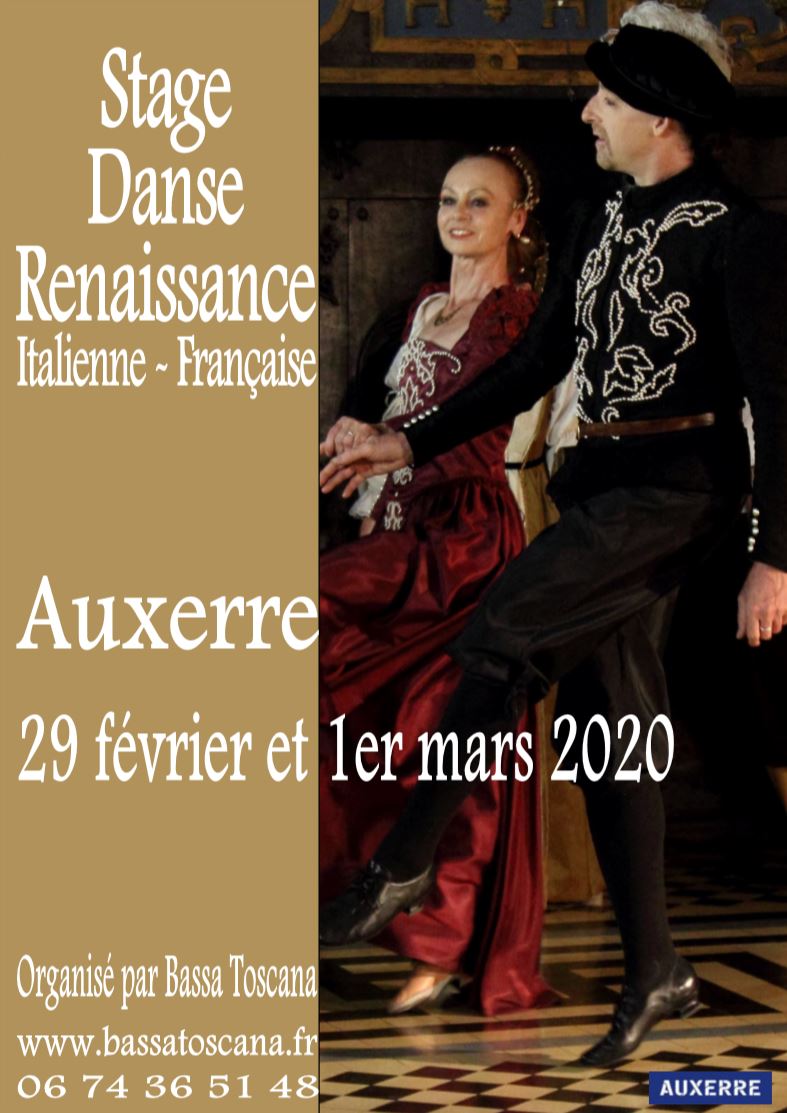
“ La danse est une espèce de réthorique muette, par laquelle l’orateur peut, par ses mouvements, sans parler un seul mot, se faire entendre et persuader les spectateurs qu’il est gaillard digne d’être loué, aymé et chéri… ” (Thoinot Arbeau, Orchésographie, Langres 1588 ). Du XVe siècle à la Renaissance, nous connaissons essentiellement la danse de cour. Bien danser, savoir chanter et jouer d’un instrument permettaient de tenir avec grâce et dignité son rang dans la société. La Renaissance en musique et en danse est caractérisée par l’introduction dans le registre courtois de formes et d’éléments populaires. C’est ainsi qu’une part importante est accordée aux rondes, facteur de convivialité et de cohésion sociale. Les traités du XVe siècle (Ebréo, Piacenza, manuscrit de Marguerite d’Autriche) et ceux du XVIe siècle (Negri, Caroso, Arbeau…) offrent les premières notations des pas et mouvements de danse. Deux formules répondront aux besoins des stagiaires, débutants ou initiés:
- Les bases de la danse de la Renaissance française seront enseignées à chacun des stages suivant le répertoire de Thoinot Arbeau, ( branle double, branle simple, branle coupé, branle morgué, branle gay, gavotte, pavane, gaillarde et volte...).
L’atelier chorégraphique s’attachera à l’étude du style et à l’expression esthétique des danses de la Renaissance italienne. La mise en espace du mouvement s’appuiera, soit sur des créations, soit sur des reconstitutions d’époque telles que: Basse danse Reale (Domenico), basse danse Cupido (Guglielmo), Leggiadra Marina, Lo Spagnoletto, Amor Costante Spagnoletta, Laura Suave...
Production:
Bassa Toscana
23.rue des Grands Champs
Laborde
89000 Auxerre
Président:
Jean-François Méchain
Animateurs membres le la Fédération française PRO.D.A
Bernadette Jacquet
Stéphane Quéant
Lieu:
Maison de la danse
9, rue Milliaux
89000 Auxerre
Renseignements
Stéphane Quéant:
06 74 36 51 48
Renseignements
FORMULE 1 (initiation )
Horaires :
Samedi 14 h à 16 h
Dimanche 12 h à 14 h
Tarifs
1 après-midi : 27 €
2 après-midi : 38 €
FORMULE 2
( initiation + atelier chorégraphique )
Horaires :
Samedi 14 h à 18 h
Dimanche 12 h à 16 h
Tarifs :
1 après-midi : 38 €
2 après-midi : 46 €
Tarifs spécial couple:
Stage complet: 85 €
½ Stage: 70 €
ANNULATION :
L’association Bassa Toscana se réserve le droit d’annuler un stage, auquel cas les inscriptions reçues seraient intégralement remboursées. Les animateurs peuvent également intervenir sur le programme en fonction du niveau et du nombre de stagiaires.
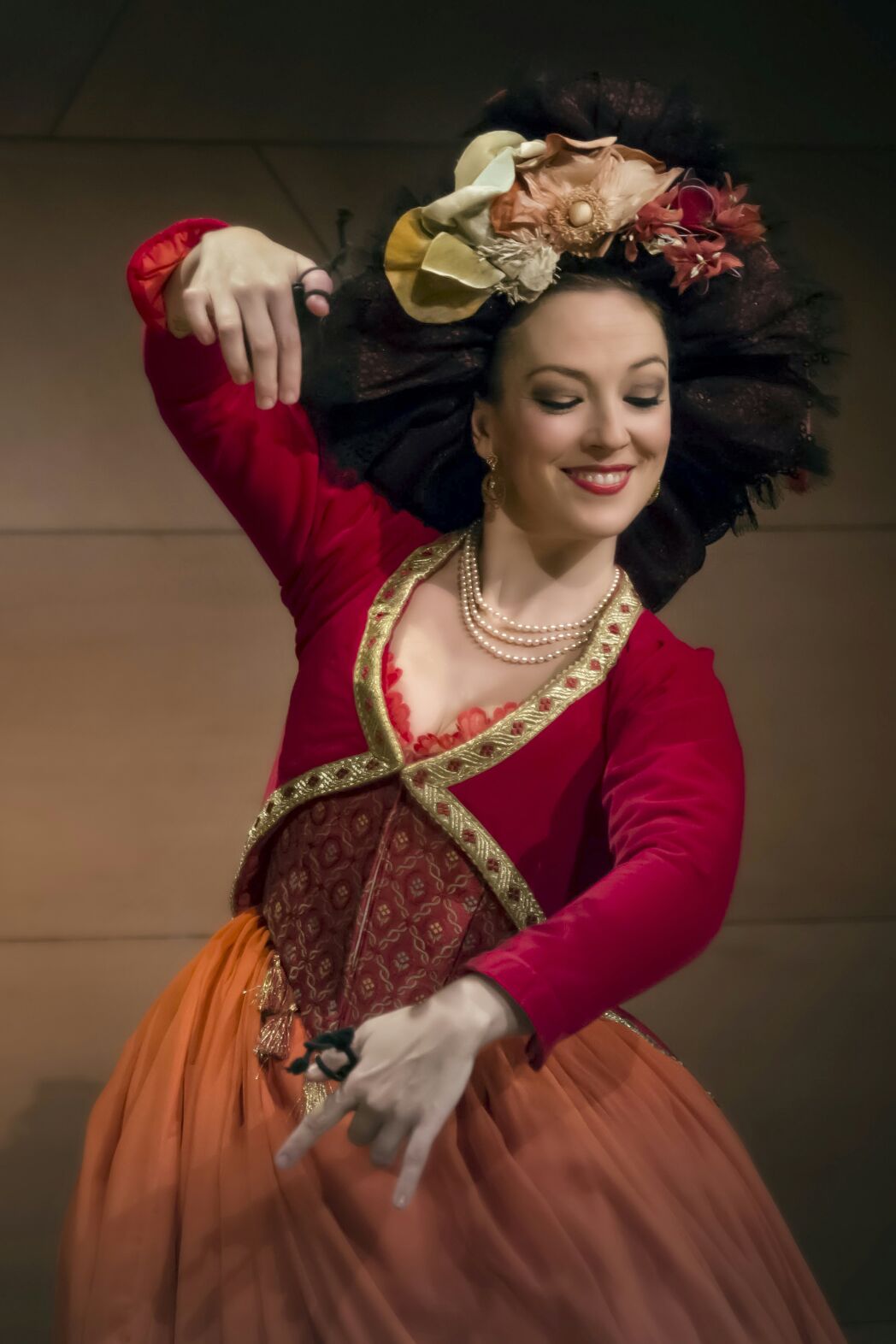
“LA DANZA EN LA ILUSTRACIÓN BORBÓNICA", CONFERENCIA ILUSTRADA CON DANZA, a cargo de
Esquivel Danza&Música.
El siglo de las luces fue, sin duda, el siglo de la Danza Española en los teatros y en los salones de la aristocracia tanto peninsular como europea y americana.
La Danza Cortesana -que había experimentado una nueva dimensión con la llegada de la dinastía borbónica, a su vez heredera de la tradición coreutica española a través de la transmisión de los maestros de danzar y las compañías teatrales que durante el siglo anterior acompañaron a las infantas españolas en su viaje a la tierras francesas- evoluciona hasta las formas del clasicismo en el que el estilo “galante” supone un nuevo paso en la evolución coreomusical tanto escénica como social.
Esquivel Danza&Música, a través de la restauración de las obras coreuticas y de creación basadas en la investigación coreológica de su directora, propone una conferencia ilustrada con danza por el apasionante y hasta ahora poco conocido aspecto de la danza en la España de la Ilustración.
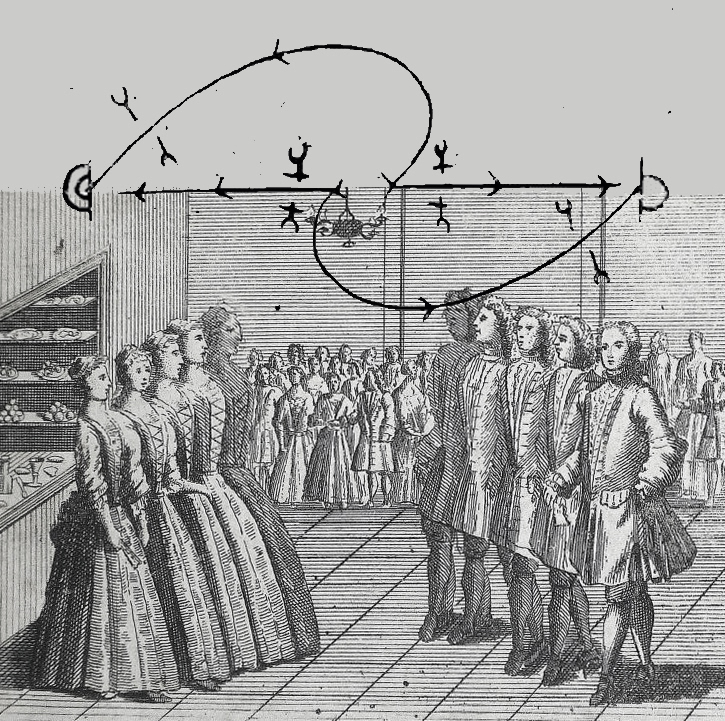
"The Beggar's Opera" von John Gay, 1728 erstmals aufgeführt, war der Mega-Hit des Jahrhunderts. Mit seinem satirischen Blick auf die Politik der Zeit, und seiner Musik, die eine Fülle populärer Melodien aufgriff, blieb das Stück viele Jahrzehnte lang ein Publikumsmagnet. Kein Wunder, dass sich auch in den Londoner Ballsälen (fast) alles um Peachum, Polly, Macheath und ihre Gesellen drehte - in Form von zahlreichen Country Dances zu den Tunes der Beggar's Opera. In diesem Kurs werden wir uns einigen dieser Country Dances widmen mit einfachem barocken Schrittmaterial.
Tänzerische Vorkenntnisse oder die Teilnahme an vergangenen Barocktanzkursen sind von Vorteil, aber nicht erforderlich. Eine paarweise Anmeldung ist nicht erforderlich. Bitte mitbringen: bequeme Trainingskleidung und Tanzschuhe mit flexibler Sohle, flach oder mit max. 3 cm hohem Absatz (keine Straßenschuhe).
Sa/So: 10:00-14:30 Uhr (mit jeweils 30 Minuten Pause)
Anmeldung über: www.mvhs.de
By the second half of the 18th century, the forlana had long been out of fashion in Parisian ballrooms. Astonishingly, toward 1780, the dancing master Malpied chose to publish an updated version of Pécour’s danse à deux La Forlana, to music from Campra’s opéra-ballet L’Europe galante of 1697. It would have been performed by young dancers in pauses between contredanses in public ballrooms and private dancing assemblies.
Malpied dedicated his dance to Maximilien Gardel, ballet master of the Paris Opera, and Gardel seems to have been fond of it, as he incorporated the melody and perhaps even the choreography into the ballroom scene of his ballet Mirza et Lindor in 1781. As late as 1815, the theoretician Jean-Etienne Despréaux, a former soloist of the Opera, further adapted this dance, using it as an example of his newly invented dance notation system, Terpsichorégraphie.
This workshop will focus on the Malpied choreography, comparing it with Pécour’s original and other forlana choreographies. To highlight changes introduced by Despréaux, the participants will receive a rare intro-duction to Terpsichorégraphie making use of his Danse Cosaque and a couplet of Folies d’Espagne. In a second focus we will take a fresh look at contredanse technique of the late 18th century, relying on Malpied’s notated steps, and put them to use in the contredanse La Perle, which distantly evokes forlanas.
Alan Jones, formerly of New York, studied Baroque dance with Wendy Hilton, but soon evolved a personal approach, acquiring a special interest for the 1780s and 1790s. His choreography in the United States includes El Sarao de Venus and Charpentier’s Les Arts florissants (New York Baroque Dance Company), El Bayle de los reyes and Stradella’s Cantata per il santissimo Natale (Artek, New York), and the Peruvian opera Venid, venid, deidades (Ex Machina, Minneapolis). Presently based in Paris, he is working on a history of American ballets and pantomimes and their European sources in the period 1782-1812. (Photo: S. Witherspoon)
Prerequisites: The seminar is intended for dancers with a good knowledge of Baroque dance. Teaching language is English.
The seminar is an excellent complement to the International Historical Dance Symposium, 15 - 19 June.
For more detailed information about the conference see: www.historical-dance-symposium.org
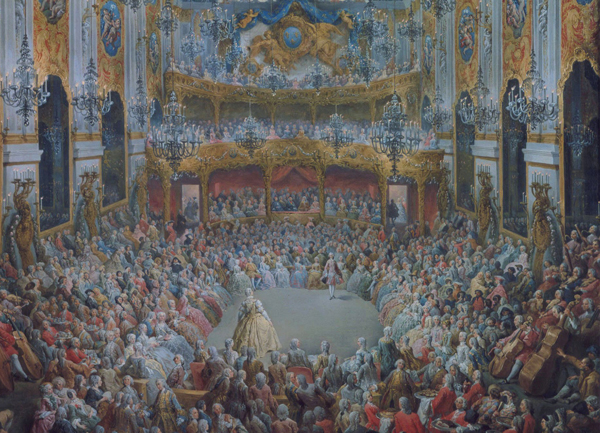
The ball, a universal social phenomenon, whether at princely courts, civic festivities or private celebrations, has many new facets across the centuries.
Dedicated to the pleasures of dance in multifarious forms and styles, the ball is also an arena for displays of princely power, staged rituals, carefully regulated forms of social contact, and advantageous self-representation. Not least, the ballrooms of Europe reflect the continent’s political and societal developments, their evolutions and revolutions.
Our journey through three centuries of dance history not only leads us to the ballrooms of Vienna, Dresden and Moscow, but also illustrates the transfer of dance culture across the whole of Europe. We trace the lives of dancing masters who once drew crowds to the ballrooms and explore the various manifestations of balls on stage.
In addition to lectures, the symposium includes workshops and dance evenings, in which the most popular ball dances, such as minuet, allemande, contredanse and quadrille, evoke the atmosphere and sensibility of these epochs.
Conference languages are English and German. This time with simultaneous translation into English and German!
RESEARCH DANCE - DANCE RESEARCH: Our central goal is to bring together dancers and researchers and thus enable intensive interaction between the latest research and current dance practice.
Lectures: Giles Bennett - Hillary Burlock - Eugenia Eremina-Solenikova - Matilda Ertz - Maria Cristina Esposito - Dmitry Filimonov - Carola Finkel - Rebecca Harris-Warrick - Gerrit Berenike Heiter - Birte Hoffmann-Cabenda - Michaela Mettel - Nona Monahin - Angela Rannow - Daria Sundukova - Eva Zöllner
Research Posters: Maria Derkach - Maria Cristina Esposito - Dmitry Filimonov - Susan de Guardiola - Alan Jones - Michaela Mettel - Ekaterina Mikhailova-Smolniakova - Daniele Pascale Guidotti Magnani - Bill Tuck - Davide Vecchi
Workshops: Anne Daye - Irène Feste - Dmitry Filimonov - Susan de Guardiola - Hubert Hazebroucq - Rostislav Kondratenko - Guillaume Jablonka
Dance evenings: Anne Daye - Alan Jones - Barbara Menard-Pugliese - Antonia Pugliese
Short performances: Chorea Basilea (dir. Mojca Gal) - Cie Fantaisies Baroques (dir. Irène Feste, Pierre-François Dollé) - LA DANZA MÜNCHEN (dir. Jadwiga Nowaczek)
Scientific committee: Dr. Irene Brandenburg (Salzburg, Österreich), Dr. Anne Daye (London, Großbritannien), Prof. em. Carol G. Marsh (Washington, USA), Prof. em. Marie Thérèse Mourey (Paris, Frankreich), Markus Lehner (Herrsching, Deutschland)
Organisation: Markus Lehner, Uwe Schlottermüller
For extensive information on the conference, see: www.historical-dance-symposium.org
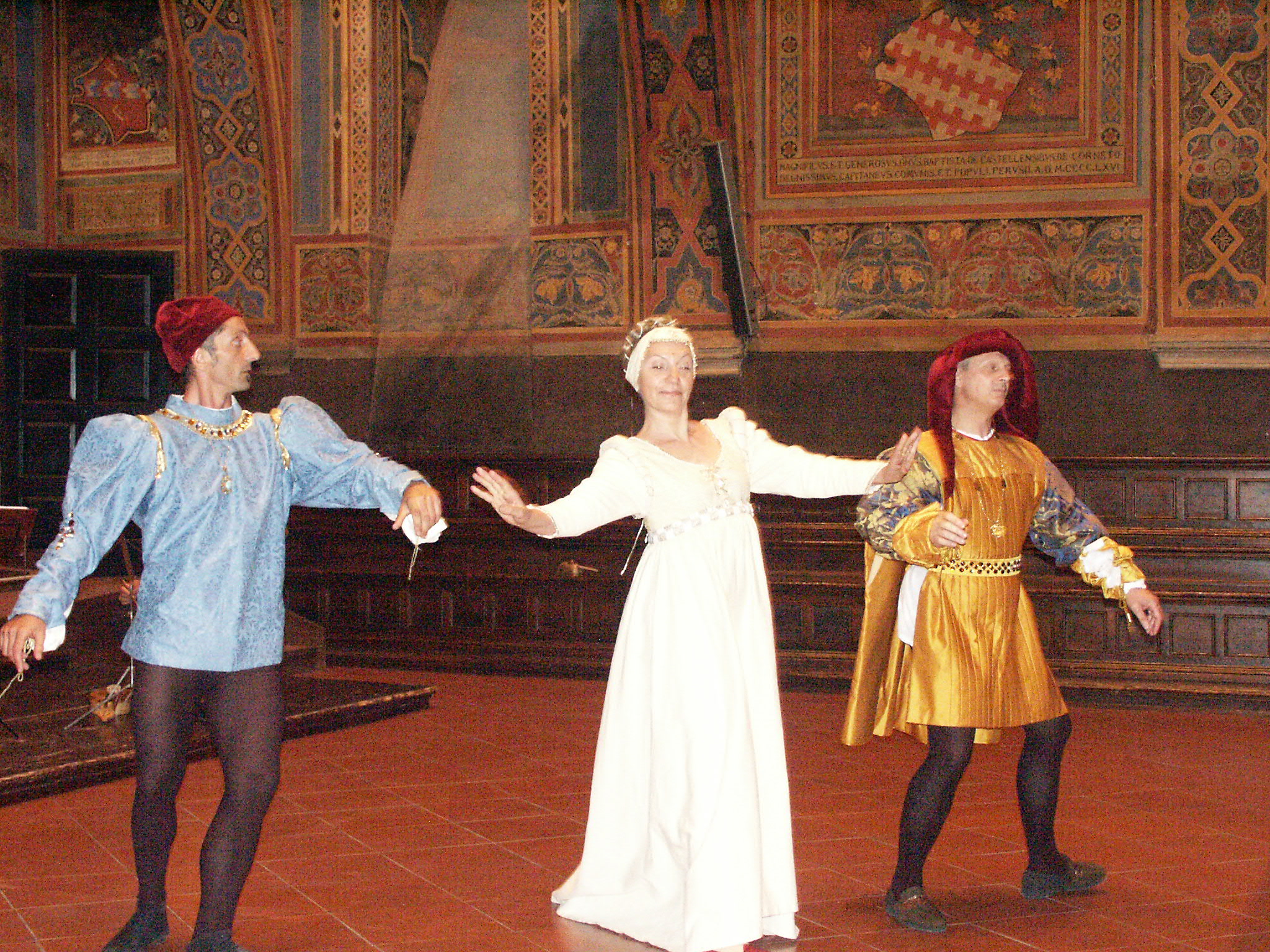
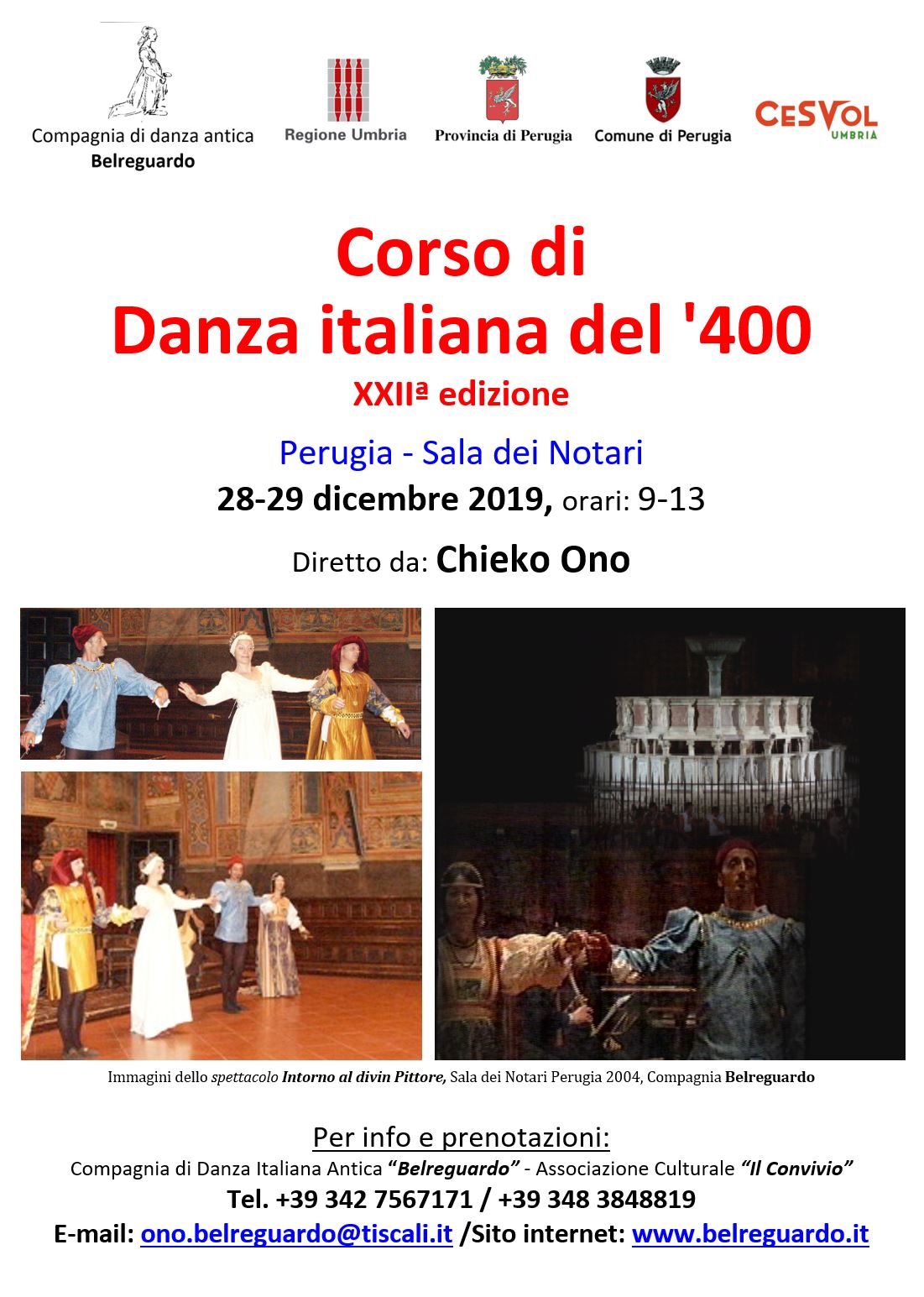
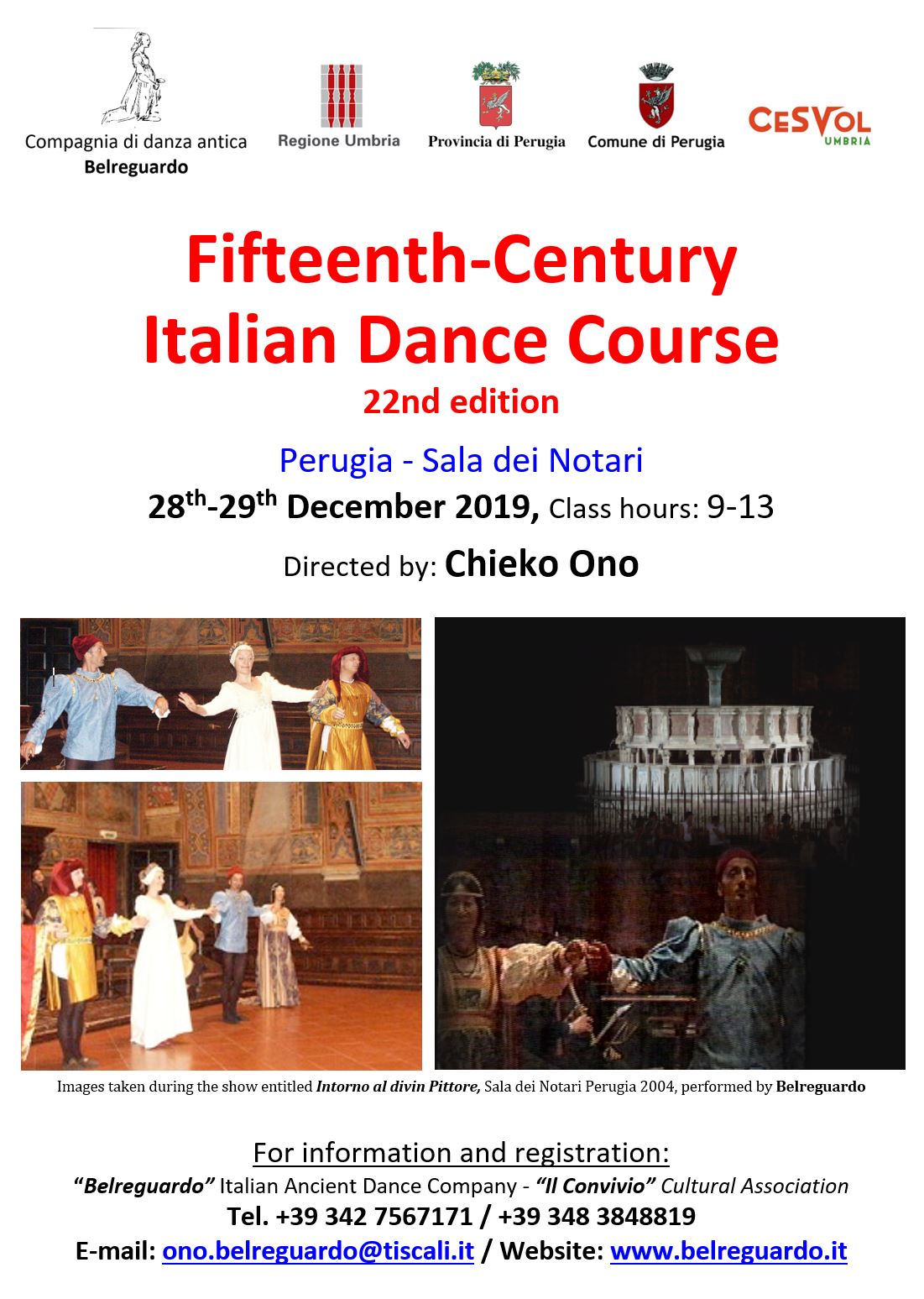
Fifteenth-Century Italian Dance Course (22nd edition), directed by Chieko Ono (see the flyer attached)
| Date: |
| Saturday, December 28th - Sunday, December 29th, 2019. |
| Time: |
|
9-13 for both days |
| Place: |
| Sala dei Notari, Piazza IV Novembre 1, Perugia, Italy |
| Program: |
| - An introduction phase in which the historical and iconographic context of the 15th-century dances will be illustrated. A particular focus will be given to the theoretical elements of bassadanza and ballo, the two major dances of the Renaissance period; |
| - A second phase of exercises to allow each participant to put into practice the theoretical elements acquired and develop their artistic skills. We will be using the CD "Gloria et Malum" which contains original ancient music, produced by Chieko Ono and the Ensemble Micrologus. |
| Registration: |
| You can sign up by sending us an email with the names of the participants to: ono.belreguardo@tiscali.it |
| Participation on both days is preferable. |
| Cost of participation: |
| 50 € / person, to be settled in advance by bank transfer to: "Ass. Cultural Il Convivio ", |
| IBAN: IT40R 03127 03001 0000 0000 3558 (Unipol Banca). Please cite the “Dance course” and your name as a reference for the payment. |
| Please do not hesitate to write us for further enquiries. We are looking forward to enjoying the art of dancing with you! Thank you. |
| "Il Convivio" Cultural Association |
| "Belreguardo" Ancient Dance Company |
| viale patrono d’Italia 66, |
| 06081 Assisi (PG), Italy |
| Tel. +39 (0) 75 8043548 / +39 342 7567171 |
| Email: ono.belreguardo@tiscali.it |
| www.belreguardo.it |
***
Corso di Danza italiana del '400 (XXIª edizione), diretto da Chieko Ono (vedi brochure allegata)
| Date: |
| sabato 28 e domenica 29 dicembre 2019. |
| Orari: |
|
9-13 entrambi i giorni. |
| Luogo: |
| Sala dei Notari, Piazza IV Novembre 1, Perugia |
| Programma: |
| - una fase di introduzione in cui verrà descritto il contesto storico e iconografico delle danze del '400. Verranno illustrati gli elementi teorici di bassadanza e ballo, in voga in quest’epoca; |
| - una seconda fase di esercizi per consentire ad ogni partecipante di mettere in pratica gli elementi teorici acquisiti e sviluppare le proprie capacità artistiche. Sarà utilizzato il CD “Gloria et Malum” contenente musiche inedite, frutto di una stretta collaborazione tra Chieko Ono e l’Ensemble Micrologus. |
| Iscrizione: |
| Inviare un’email con i nominativi dei partecipanti a: ono.belreguardo@tiscali.it |
| E’ preferibile la partecipazione ad entrambe le giornate. |
| Costo di partecipazione: |
| 50 euro/persona, da pagare in anticipo con bonifico intestato a: “Ass. Culturale Il Convivio”, |
| IBAN: IT40R 03127 03001 0000 0000 3558 (Unipol Banca). Inserire nella “causale” il riferimento “CorsoPG2018” e il proprio nominativo. |
| Rimaniamo a disposizione per ulteriori informazioni. Vi aspettiamo! |
| Grazie. |
| Associazione Culturale "Il Convivio” |
| Compagnia di Danza Italiana Antica "Belreguardo" |
| viale patrono d’Italia 66, |
| 06081 Assisi (PG), Italia |
| Tel. +39 (0) 75 8043548 / +39 342 7567171 |
| Email: ono.belreguardo@tiscali.it |
| www.belreguardo.it |
|
Note:
Nei manoscritti "dell’arte del danzare" del '400 sono conservate teorie, coreografie e talvolta musiche dalle quali è possibile ricostruire le danze di corte italiana. I precettori dell’epoca infatti codificarono le danze in trattati tecnici e pratici che ancora oggi si trovano nei manoscritti delle varie biblioteche del mondo. Crediamo che questo workshop di danza di corte rappresenti un’ottima occasione per conoscere lo stile e le regole stabilite dai maestri italiani del '400 e far rivivere il Rinascimento sulla nostra pelle. È possibile, infatti, scoprire la cultura dell’epoca rinascimentale non solo tramite la pittura, l’architettura e la musica, ma anche attraverso la danza facendo uso del proprio corpo. La particolarità del workshop è rappresentata dall’uso di testi originali dell’epoca, la cui ricostruzione e rielaborazione sono il frutto di ricerche e studi costanti di Chieko Ono, oltre a rappresentare un’assoluta novità. Il workshop, organizzato dalla Compagnia di danza Belreguardo, è rivolto a tutti: professionisti del settore, principianti e semplici appassionati che vogliono condividere insieme la gioia del danzare. Ai partecipanti non è richiesta alcuna preparazione specifica. |
|
La Compagnia di danza Belreguardo è stata fondata nel 1993 ad Assisi, dove ha tuttora sede, e realizza spettacoli e corsi che uniscono danza, musica e recitazione. La Compagnia si è esibita presso luoghi storici celebri in Italia e all’estero.
Un dettagliato resoconto delle attività è disponibile nel sito ufficiale della compagnia: www.belreguardo.it |
| Chieko Ono è laureata in Giappone, vive fra Assisi (PG) e Guardea (TR) ed è direttrice dell’Associazione culturale Il Convivio. Ha fondato la Compagnia di Danza Belreguardo nel 1993. La sua attività principale è la ricerca filologica finalizzata alla ricostruzione e alla valorizzazione della danza italiana del XV e XVI secolo partendo dall’analisi di documenti originali dell’epoca. Conduce laboratori di danza di corte italiana in Italia e all’estero (Australia, Giappone, USA e Svizzera). Ha svolto diverse conferenze frutto dello studio comparato della danza antica in Oriente e Occidente. Ha tradotto il libro La danza giapponese di Tamotsu Watanabe (Ed. Ali & No, 2001). Ha prodotto il CD Gloria et Malum – musiche della danza italiana del Quattrocento (Micrologus-Belreguardo, 2008). Scrive per la rivista Tohoku Art and Culture Society (articolo La danza e l'arte italiana del quindicesimo secolo: opere d'arte in movimento, Danza italiana del 15° secolo, Tohoku Art and Culture Society n. 17, 2012). |